


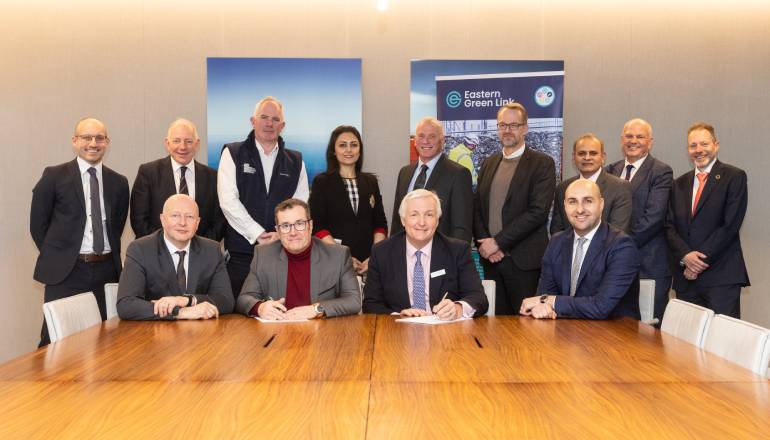
SSEN Transmission and National Grid Electricity Transmission (NGET) have signed up Prysmian to supply cables, and Hitachi Energy and BAM, to supply converter stations for the Eastern Green Link 2 (EGL2) new subsea electricity superhighway.
The partners’ project will see the creation of a 525kV, 2GW HVDC subsea transmission line from Peterhead in Scotland to Drax in England.
Prysmian has confirmed it has the capability to deliver the project with its manufacturing facilities for the production of the HVDC wire and its cable laying vessels for the installation in the timescale required for EGL2 to meet its targeted energisation date in 2029, supporting the timely delivery of this project and mitigating risks associated with global constraints in the HVDC supply chain.
Hitachi Energy is partnering with BAM to provide the engineering works and technology for the HVDC converter stations which form the terminals for the cable and convert direct current to the alternating current used in the onshore transmission network.
This latest milestone is another significant step as the project moves towards delivery and, following final approval from Ofgem, work is expected to commence later this year, with a targeted operational date of 2029.
The subsea HVDC cable system is approximately 436km in length with new converter stations at either end to connect it into the existing transmission network infrastructure.
SSEN Transmission’s Ricky Saez, the EGL2 project director, said: “Getting the contract signed with Hitachi Energy and BAM for delivery of the convertor stations is another big step in delivering EGL2.
“The convertor stations at either end of the cable will play a crucial role in making the power transported by this HVDC link onto the onshore transmission network quicker. By signing up today Hitachi Energy and BAM – who have a great track record in delivering infrastructure like this – will allow that technology to improve the network and flow of greener energy.
“Likewise signing the cable contract with Prysmian is a hugely important step too, particularly given global supply chain constraints in HVDC cabling – the cable being the crucial link between both converters. This is a fantastic moment for the EGL2 project.”