


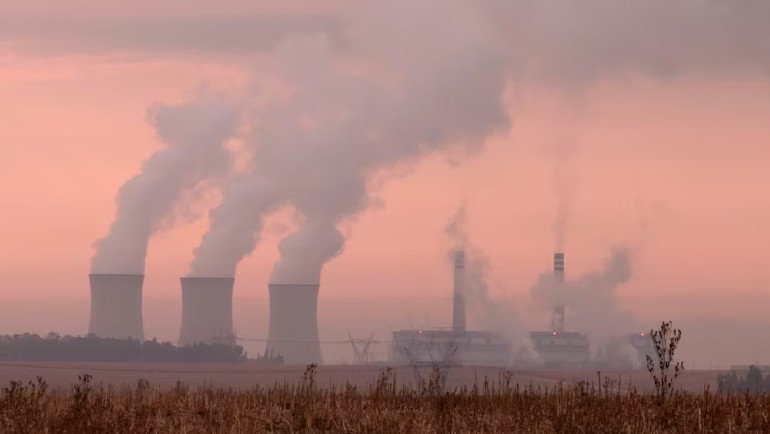
Mainstream Renewable Power has signed a lease agreement for a 1650-hectare site in South Africa where it plans to build and operate renewable energy plants.
The land is located next to the Majuba and Tutuka coal-fired power stations in the Mpumalanga Province of South Africa.
The agreement, signed with South African national electricity company Eskom, will run for 25-30 years. It is expected that the generators will be connected to the grid within 36-48 months from financial close, subject to environmental and other regulatory approvals.
The move is part of a new initiative by Eskom to make land available around existing power stations with sufficient, available grid capacity to fast-track the connection of large quantities of renewable energy to the national grid.
This agreement is one of four similar agreements signed by Eskom that will contribute hundreds of megawatts of renewable energy to the national grid.
Mainstream will now conduct a comprehensive series of feasibility studies to determine which technologies will be implemented – wind, solar, and battery storage.
The exact generation capacity will be known once the studies have been completed.
The land parcels have already been thoroughly screened for useability, taking into account accessibility, areas above underground mines, future mining activities, the conservation of environmentally sensitive areas such as wetlands and heritage sites, and the sloping of the land parcels.
Mainstream General Manager for Africa Hein Reyneke said: “As one of the most established and successful renewable energy companies in South Africa, Mainstream is proud to support Eskom in its initiative to expedite the connection of large quantities of much-needed clean, affordable power to the grid as part of the just transition to renewable energy.
“We look forward to delivering renewable power at scale at this site and in doing so help to industrialise the renewable energy sector in South Africa bringing thousands of much-needed jobs as well as long-term benefits to the surrounding communities.”