


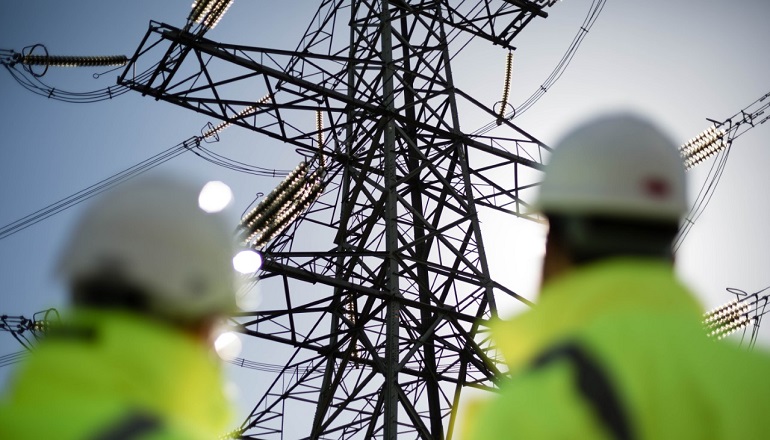
National Grid has accelerated engineering works to address a bottleneck in connecting low carbon projects to the electricity network in south west England and Wales.
The 82km upgrade of one its high voltage overhead electricity lines, between Bramley in Hampshire and Melksham in Wiltshire, has been brought forward to help accelerate the connection of 175 clean energy projects to the grid.
The £90m investment includes replacing conductors – the wires strung between the 229 transmission towers (known as pylons) on the route – with new cables.
These can operate at a higher temperature and therefore allow more power to pass through the transmission circuit, National Grid said.
The upgrade of approximately 3000MVA (Megavolt-Amperes) will allow increased flow of electricity out of South West England on the high voltage network, removing a constraint for the 175 projects looking to connect in the region which currently have connection dates of 2028 and beyond.
The project has been brought forward a year and will now begin in January 2024, finishing in October 2025, with National Grid – in partnership with the ESO – discussing accelerated connection dates with customers as part of each individual project’s development.
Alice Delahunty, president at National Grid Electricity Transmission, said: “Accelerating grid connections for clean energy projects is a massive priority for us.
“We recognise the urgency which is why we have brought this project forward to make a real difference for our customers.
“The need to build new network infrastructure is widely acknowledged, but upgrade projects to existing power lines such as this are an equally important part of how we are making sure the grid is fit for the future.
“We look forward to completing the work and working with customers to accelerate clean energy connections to the grid.”
Graham Stuart, Networks Minister at the Department for Energy Security and Net Zero, said: ”We recently announced the most radical grid upgrade since the 1950s.
“The plans will halve the time it takes to build power lines from 14 years to seven, and cut the average delay to connect projects to the grid from five years to just six months.
“This £90m upgrade to the power network means clean energy projects will be hooked up earlier, boosting our capacity and accelerating our path to net zero and greater energy security.”
RenewableUK’s director of future electricity systems, Barnaby Wharton, added: “This is a great example of the way the grid is being upgraded to enable everyone to benefit from the vast quantities of electricity we’re now generating from renewables.
“By addressing grid bottlenecks effectively and swiftly, projects like this strengthen our energy security and maximise savings for consumers, as we build up our twenty-first century energy system based on clean home-grown power sources.”