


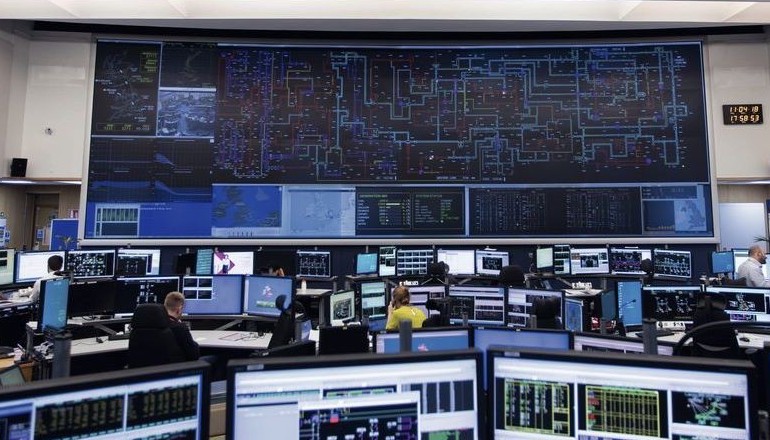
National Grid Electricity System Operator (ESO) is implementing measures designed to unlock the potential of smaller, regionally connected renewable energy resources on the south coast of England.
Through its Regional Development Programme (RDP), the ESO is working with National Grid Electricity Transmission (ET) and distribution network operator Scottish and Southern Energy Networks (SSEN) on a way to “more efficiently” manage the growing volume of distributed energy resources (DER) in the region, such as small and medium-sized wind and solar farms.
In the initiative DERs are connected and provide power to regional power networks rather than to the main high voltage transmission system, to “improve the flexibility of the grid and its ability to draw on energy resources beyond the large centralised power stations,” according to the partners.
By introducing a system called active network management (ANM) onto south coast regional energy networks distributed generators in the area can continue providing power to the grid during difficult system conditions, when previously they might have been restricted off in anticipation of a fault or to avoid overloading the system.
SSEN head of future networks Stewart Reid said: “It is great to see active network management being applied at scale in the south of England, and SSEN are proud to be working with ESO on this RDP.
“The concept of ANM enabled ‘smart-grids’ originated in Orkney, about as far as you can get from these latest installations, and shows how the combination of renewables and smart network management techniques can help the UK meet its net zero goals.”
The new south coast initiative will harness DERs’ potential still further, enabling them to play an important role should transmission network conditions become particularly challenging – for example around the time of a fault on the network.
ANM systems offer vast improvements against traditional ‘intertrip’ systems, which only enabled on or off settings for connected generators when faced with adverse network conditions, according to National Grid ESO.
Under ANM control, multiple DERs on the south coast network can potentially continue to generate power within controllable limits, monitored and adjusted in real time to meet demand, reducing the need for generation to be completely curtailed.
The initiative will benefit a region which has already seen significant growth in DER, encouraging new connections to SSEN’s network and making sure as much generation as possible can be maintained according to the system conditions.
National Grid ESO networks head Julian Leslie said: “Regional development programmes like this are providing a great way to develop closer ways of working with other network organisations.
“Through ESO’s and National Grid ET’s work with SSEN, we’ll be able to connect greater volumes of zero carbon generation, maximising the efficiency and capacity of existing networks and ultimately reducing costs for consumers.
“It’s also another way we’re working with industry to help Great Britain on the path to net zero.”