


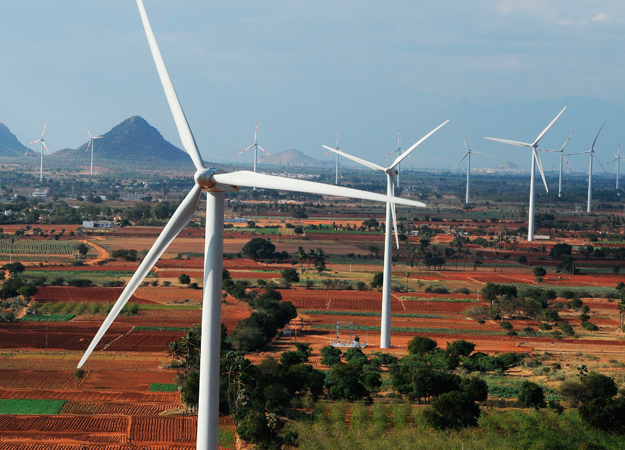
India could add almost 24GW of wind capacity within the next five years, according to a new report from the Global Wind Energy Council (GWEC) and MEC Intelligence (MEC+).
Renewing wind growth to power the energy transition: India Wind Energy Market Outlook 2026 highlights wind energy’s critical link to India’s green energy transition.
The outlook suggests that the country can add another 23.7GW of capacity within the next five years provided necessary enabling policies, facilitative instruments, and the right institutional interventions are put in place.
Recommendations include strengthening consensus and coordination between central and state governments; promoting technology exchange and alignment to the global wind supply chain; and exploiting repowering opportunities that offer an efficient pathway for India to maximize productivity and socioeconomic benefits from sites already designated for onshore wind power production.
The report also suggests addressing the legacy challenges which have disrupted the development of wind energy and finalising and implement offshore wind development roadmaps.
GWEC chief executive Ben Backwell said: “This Outlook is published as the world faces a decisive moment; there is a narrow window of opportunity to halt the irreversible damage to this planet from climate change by making an urgent shift to clean energy.
“India can seize this opportunity, but it must kick-start its energy transition after delays due to the pandemic.
“To seize this enormous opportunity, India must focus on three areas: Dialogue between the central government and the states to foster consensus building; delivery to help match timelines and targets, and the potential for India to be a destination for the global wind manufacturers and suppliers.”
Wind power constituted the majority of the renewable energy mix in India, with 37.7% of cumulative installed capacity, as of March 2022, according to the report.
However, the overall estimated potential dwarfs the current installed capacity, it found, with over 600GW of onshore capacity at 120 metre hub height, with another 174GW of fixed-bottom and floating offshore wind potential.
These statistics demonstrate that there is a huge untapped wind energy potential that will be crucial for advancing the country’s clean energy transition, the report concluded.
The outlook finds that the market in India has been affected by the pandemic, with the second wave of COVID-19 in the country, coupled with global supply chain challenges, causing disruption.
However, the Ministry of New and Renewable Energy (MNRE) took several measures at this time.
For example, the ministry granted a blanket timeline extension, which pushed the 0.7GW of delayed projects to 2022.
Between 2021 and until the release of this edition, 2.65GW of the SECI awarded wind/solar hybrid (WSH) tenders and 3.5GW of standalone wind projects were awarded.
Unlike the previous years, both standalone and hybrid projects were oversubscribed, this reinstates the ever-growing prominent role of wind energy for decarbonization and resilience building in the grid system.