


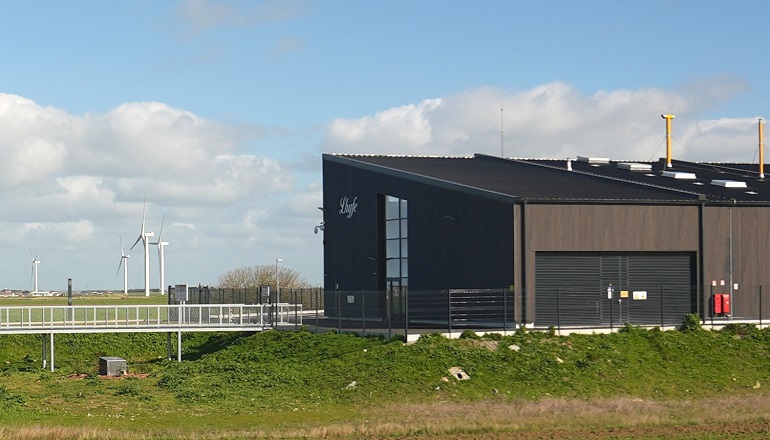
French renewable hydrogen developer Lhyfe has unveiled plans to build a 200MW project in the Netherlands.
The green hydrogen project will be located at the Delfzijl chemical cluster, in the Groningen province with the aim of commissioning in 2026.
It will be capable of producing more than 20,000 tonnes of renewable green hydrogen per year, equivalent of 55 tonnes per day.
Lhyfe has already secured the required plot of land and renewable energy connections in the Netherlands.
The Delfzijl project is subject to obtaining required operation licences and building permission as well as a financial investment decision.
Delfzijl is home to a significant industrial and chemical industry and already uses large quantities of hydrogen in manufacturing processes.
Lhfye will be able to support companies in their decarbonisation efforts by supplying them with renewable green hydrogen using renewable electricity from the region in the electrolysis process.
The Netherlands aims to be one of Europe’s pioneering countries in green hydrogen, with the roll-out of a national pipeline to supply industrial clusters.
This “hydrogen backbone” will be based on the Groningen gas grid.
Old salt caverns will be converted to store hydrogen along the backbone, securing a steady flow of green hydrogen to the industrial users when renewable energy is not available.
Luc Grare, head of Central and Eastern Europe at Lhyfe, said: “Delfzijl is an ideal location for renewable green hydrogen production as it has direct access to renewable energies from its offshore wind power plants which are situated off the coast.
“The region’s goal is to become the leading hydrogen valley of North-Western Europe and to build up a complete value chain from production, storage and transportation of green hydrogen.
“Renewable green hydrogen as an energy carrier will support the transport of offshore generated energy through the country, helping to ease an already congested electricity grid.
As such, Lhyfe’s Delfzijl plant will be able to supply green hydrogen throughout the Netherlands, as well as to potential off-takers in Germany and other bordering countries.”