


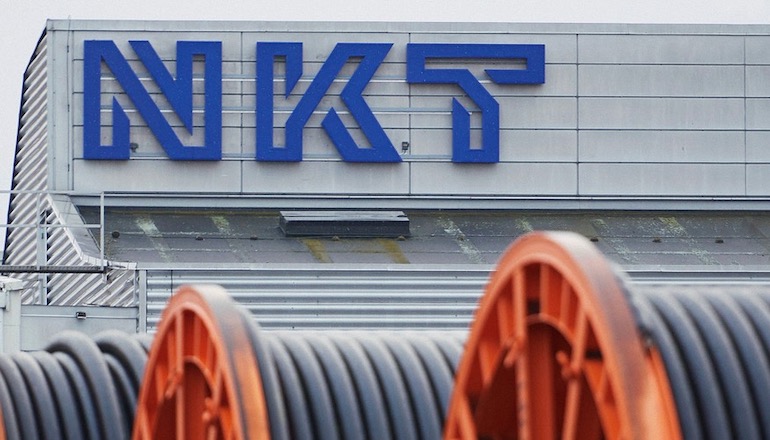
NKT has signed an international responsible business agreement with the Social and Economic Council of the Netherlands (SER), to promote International Responsible Business Conduct (IRBC).
Joining the IRBC agreement underscores the subsea cable producer’s commitment to mitigate risks in the value chain related to human rights and the environment.
As part of its sustainability strategy, code of conduct and ongoing business activities, NKT is dedicated to being a fair and responsible business partner, continuously striving to uphold and strengthen the commitment to these fundamental principles.
In line with these efforts, NKT has identified an opportunity to join International RBC, a Dutch-based multi-stakeholder initiative, where shared practices and knowledge can elevate NKT’s due diligence and risk mitigation capabilities.
As of now, NKT is a member of the International RBC Agreement for the Renewable Energy Sector, facilitated by the Social and Economic Council of the Netherlands (SER).
NKT has a strong footprint in the Netherlands, and the membership will strengthen NKT’s work in a Dutch context as well as across Europe.
“We are pleased to welcome NKT A/S as a member of the IRBC Agreement for the Renewable Energy Sector.
“Cables are a crucial component of the renewable energy supply chain, enabling the transition to a more sustainable energy system.
“We look forward to collaborating with NKT within the Agreement to strengthen responsible business conduct and drive positive impact across the sector,” said Kees Vendrik, Chairperson of the IRBC Agreement for the Renewable Energy Sector.
NKT is located in more than 36 locations around the world, including Rotterdam in the Netherlands.
In the agreement, private companies, trade unions, NGOs and the Dutch government work together with the aim of promoting international responsible business conduct (IRBC) in the renewable energy sector.
This is done by jointly identifying risks in the value chain in the field of human rights and the environment and addressing or preventing them, for example through collective projects.
A total of 56 companies from this sector are currently participating and active in various links of the value chain and are in contact with a broad network of suppliers and customers.