


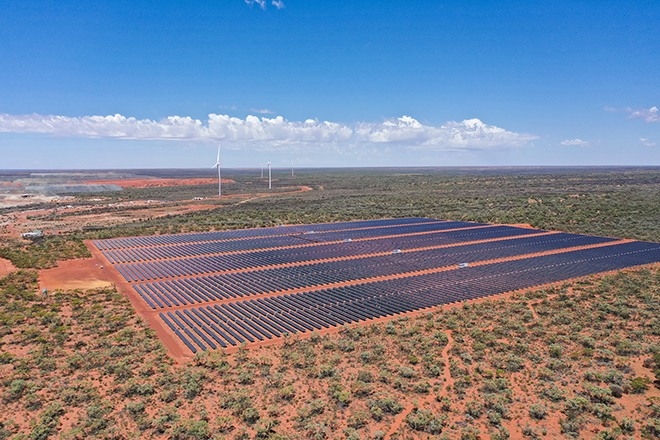
Pacific Energy has completed a renewable energy expansion of its power system at Tropicana gold mine in Western Australia.
The hybrid power system (pictured), delivered under a new 10-year build-own-operate agreement, commenced commercial operations in February.
The project, which adds 61MW of renewable energy to Pacific Energy’s existing 54MW gas-fired power station, brings the total capacity to 115MW, making it Australia’s largest off-grid hybrid system to power a mine.
The renewables expansion incorporates four 6MW wind turbines, a 24MW solar farm and a 13MW grid-forming battery energy storage system (BESS).
Tropicana is owned by AngloGold Ashanti Australia Ltd (70%) and Regis Resources Ltd (30%) and is located 330km northeast of Kalgoorlie in Western Australia.
Pacific Energy said the integration of its cutting-edge intelligent control solution, BESS and virtual synchronous machine technologies means assets can work in harmony to stabilise the 115MW system.
This approach replaces legacy solutions like thermal-powered spinning reserve and synchronous condenser units, resulting in a state-of-the-art, technically advanced power system, the company said.
This combination of technologies also enables ultra-responsive hydrocarbons-off functionality, which can power Tropicana’s mining operations using 100% solar, wind and BESS for extended periods of time.
The new facility is expected to reduce Tropicana’s diesel and gas consumption for power generation by 96% and 50% respectively, slashing carbon emissions by an average of 65,000 tonnes per annum over the life of the agreement.
Pacific Energy’s new wind-solar-battery facility will support AngloGold Ashanti’s strategy to reduce its global net carbon emissions from energy use by 30% by 2030.
It is the first of its kind to be implemented within the AngloGold Ashanti group.
Pacific Energy’s chief executive Jamie Cullen said the system was already outperforming targets.
“The new assets have already generated over 38,000 megawatt hours of renewable energy, and that’s mostly while we were still bringing the equipment online,” he said.
“We’re also on track to displace an average of more than 1100 terajoules of gas with solar and wind-generated power every year, and we expect to almost entirely displace diesel, which is now there purely for emergencies.
“In real-world terms, these fuel reductions will reduce Tropicana’s power generation emissions by upwards of 45%, which is equivalent to taking more than 14,000 cars off the road.”
Cullen said that despite encountering some significant challenges, including severe flooding during the construction phase, the project was delivered safely, on time and on budget.
He added: “AngloGold Ashanti trusted Pacific Energy to deliver an outcome that’s aligned with their net zero strategy and their commercial and operational goals.
“We’re really proud to have achieved exactly what we committed to back in 2023, and to have integrated cutting-edge technologies that will continue to support their decarbonisation pathway for years to come.”