


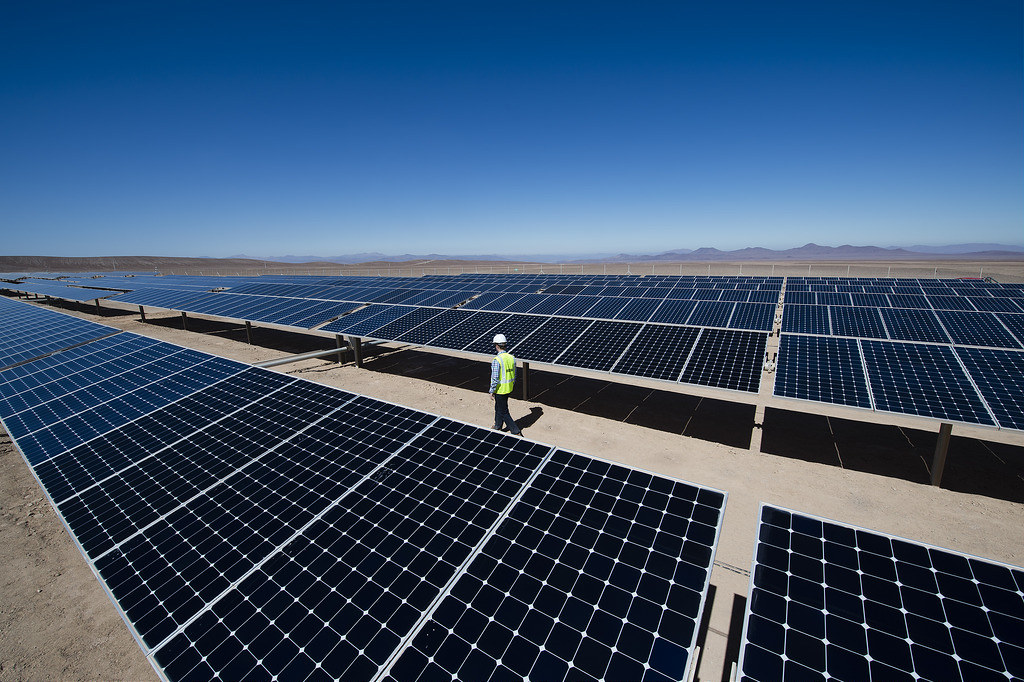
Record renewables growth pushed global electricity to a new milestone in 2024, according to energy think tank Ember.
The world surpassed 40% clean power for the first time since the 1940s, Ember’s research found.
Renewables were the main driver of overall clean growth, adding a record 858TWh in 2024, 49% more than the previous high in 2022.
Solar was the largest contributor for the third year running, adding 474TWh to reach a share of 6.9%.
Ember’s report said solar was the fastest-growing power source (+29%) for the 20th year in a row.
Solar electricity has doubled in just three years, providing more than 2000TWh of electricity in 2024.
Wind generation also grew to 8.1% of global electricity, while hydro’s share remained steady at 14% – the single largest renewable source.
Ember’s managing director Phil MacDonald said: “Solar power has become the engine of the global energy transition.
“Paired with battery storage, solar is set to be an unstoppable force.
“As the fastest-growing and largest source of new electricity, it is critical in meeting the world’s ever-increasing demand for electricity.”
Ember’s sixth annual Global Electricity Review provides the first comprehensive overview of the global power system in 2024 based on country-level data.
It is published today alongside the world’s first open dataset on electricity generation in 2024, covering 88 countries that account for 93% of global electricity demand, as well as historical data for 215 countries.
The analysis finds that, despite the rise in renewables, fossil generation saw a small 1.4% increase in 2024 due to surging electricity demand, pushing global power sector emissions up 1.6% to an all-time high.
Heatwaves were the main driver of the rise in fossil generation, accounting for almost a fifth (+0.7%) of the increase in global electricity demand in 2024 (+4.0%), mainly through additional use of cooling.
“Amid the noise, it’s essential to focus on the real signal,” continued MacDonald. “Hotter weather drove the fossil generation increase in 2024, but we’re very unlikely to see a similar jump in 2025.”