


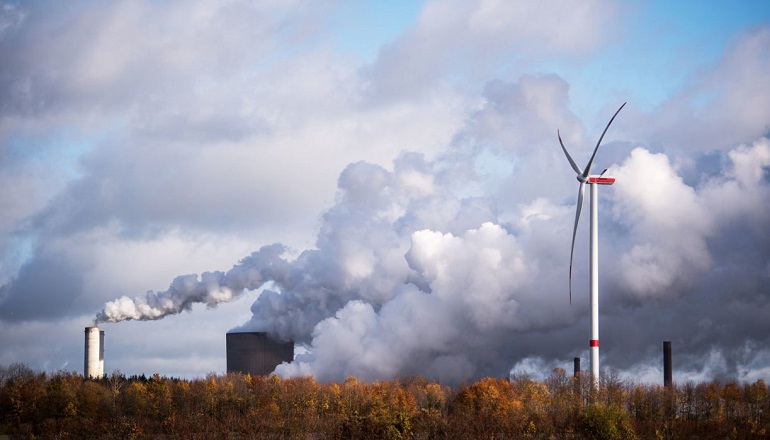
Electricity produced by renewables across the EU exceeded fossil fuel generation for the first time ever this year, according to a report by climate and energy thinktank Ember.
In the first half of 2020, wind, solar, hydropower and bioenergy generated 40% of the electricity produced by the EU bloc of 27 member states, compared with 34% generated by fossil fuels.
Renewables rose by 11%, driven by new wind and solar installations and favourable conditions during a mild and windy start to the year, the study found.
Wind and solar alone reached a record of 21% of Europe’s total electricity generation and reached even higher penetration in Denmark (64%), Ireland (49%) and Germany (42%).
Though electricity grids have coped well with record wind and solar penetrations, negative prices are “highlighting inflexibilities” in supply and demand that need to be addressed, Ember’s report noted.
Fossil fuels fell by 18%, squeezed on two fronts, by rising renewable generation and a 7% fall in electricity demand due to Covid-19.
Coal took the brunt, falling by 32%, the report found.
Of this figure, hard coal generation fell 34% and lignite fell 29%.
Gas generation registered a fall of 6%, falling in eleven countries.
As a result, EU-27 power sector carbon dioxide emissions fell by about 23%.
Germany’s coal generation fell below Poland’s for the first time.
Poland generates more coal-fired electricity than Germany, but also as much as the remaining 25 EU countries combined.
Ember senior electricity analyst Dave Jones said: “Renewables generated more electricity than fossil fuels, driven by wind and solar replacing coal.
“That’s fast progress from just nine years ago when fossil fuels generated twice as much as renewables.
“But the change is not equal: Poland is now Europe’s biggest coal generator and Czechia is the third largest.
“For countries like Poland and Czechia there is now a clear way out, should they choose to take it.”