


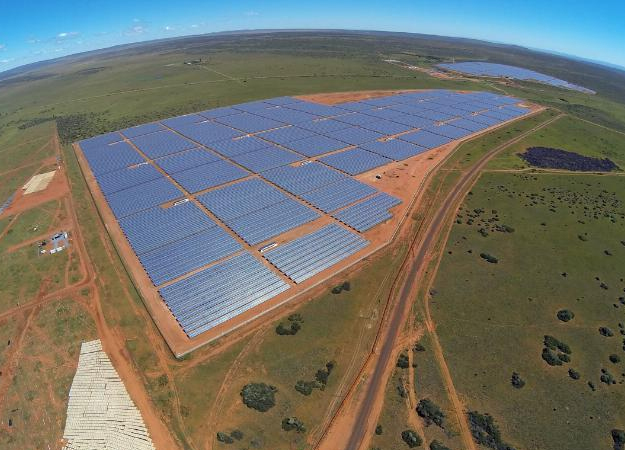
Repsol has become the first oil and gas producer to target net zero emissions by 2050, accelerating investment in renewables capacity to help meet the goal.
The Spanish energy company plans to boost its target for low-carbon electricity generation capacity by 3GW to 7.5GW by 2025.
Repsol said it will start to expand into other markets to become a “leading international player” in renewable energies.
It currently has 2952MW of renewables capacity in operation and 1083MW under development.
In order to meet the net zero target, Repsol is setting new goals for the reduction of its carbon intensity indicator from a 2016 baseline of 10% by 2025, 20% by 2030, 40% by 2040, and net zero carbon dioxide emissions by 2050.
These figures will form the basis for the company’s 2021-2025 strategic plan, which will be presented to the market and investors in the first half of 2020.
The board of directors has approved new investments to incorporate and build two photovoltaic and one wind power projects totalling an additional 1600MW, taking the company’s renewable power portfolio to 5600MW.
Repsol said that it is possible to achieve at least 70% of the 2050 target with technology that can “currently be foreseen”, and said it is “committed to applying the best available technologies to increase this figure, including carbon capture, use and storage”.
In addition, Repsol said it would, if necessary, offset emissions through reforestation and other natural climate sinks to achieve zero net emissions by 2050.
Chief executive Josu Jon Imaz said, “We are convinced that we must set more ambitious objectives to fight climate change. We believe now it is the right time for Repsol.
“We do it with the utmost confidence that we invest for the future. Addressing the significant challenges that lie ahead with strategic clarity is what will allow us to turn them into opportunities. We are convinced that this strengthens our project that is sustainable, attractive and profitable for all our stakeholders.”
Repsol will also integrate renewable energy into refining operations, which will incorporate production of green hydrogen as well as the use of renewable energy to fuel industrial processes.
The company’s service stations will continue to expand the offering of electric charging points, liquid petroleum gas, compressed natural gas and liquefied natural gas, and will continue to complement its electricity offering with high-value services, such as domestic renewable power, aligned with the decarbonization pathway.
Repsol has also updated the internal carbon dioxide price deck that will guide its investments, starting at $25/tonne in 2018, with an increase of up to $40/tonne by 2025.
Additional growth is also being established from that year, to $70/tonne by 2040 for refining, chemicals and gas and electricity assets, which will favour investments in renewable energy, efficiency and the circular economy, the company said.
To reinforce commitments to these goals, Repsol will link at least 40% of the long-term variable pay of its managers and leaders, including that of the chief executive and senior executives, to objectives that lead the company to comply with the Paris Agreement.