


The EU’s REPowerEU initiative could be undermined by a proposed delegated act that specifies the future game rules for European hydrogen production, according to RWE.
The German energy company said that instead of accelerating the ramp-up of the hydrogen economy, the planned delegated act puts unnecessary shackles on it.
The delegated act specifies that, following a short transitional period, by 2026 it will be permissible to use only electricity from newly constructed, unsubsidised wind and solar plants to generate green hydrogen.
“Even if planning and approval processes for new wind and solar power plants are to be accelerated in future, this would mean that it would not be possible to produce green hydrogen in large volumes before 2030,” RWE said.
The proposal that electrolysers may only produce hydrogen when electricity is almost simultaneously being produced by these new wind and solar farms is also problematic, the company added.
“This temporal correlation means that electrolysers would have to sit idle during any extended calm period,” it said.
“The result would be an unnecessary increase in the price of hydrogen due to more complex operations, and would make it almost impossible to ensure a continuous supply to industry,” RWE said.
The company said that what is intended as acceleration will in fact amount to “slamming on the brakes”.
In other areas, such as electric mobility, there is no direct coupling of generation from directly allocated renewables plants either.
“What is more, from an energy industry perspective this kind of approach is entirely unnecessary, since emissions trading regulates CO2 reductions and ensures that emissions of CO2 are limited to the available number of allowances,” RWE said.
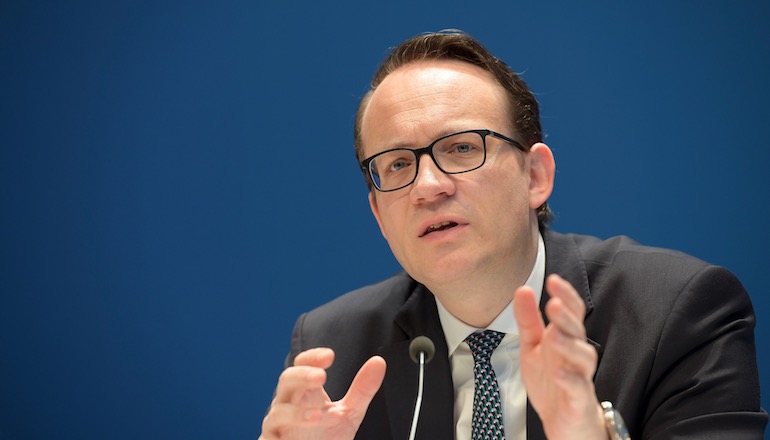
RWE chief executive Markus Krebber (pictured) said: “The European Commission’s REPowerEU package was conceived as a watershed for security of supply and climate protection.
“The increased targets for the expansion of renewables and the ramp-up of hydrogen are a step in the right direction.
“But the detailed rules around hydrogen criteria that have now been proposed will put the brakes on needed investment in the coming years.
“The transformation of industry will be unnecessarily delayed because the green hydrogen that is urgently needed will not be available quickly enough in the volumes required.
“The current detailed rules proposal will put the brakes on a good plan.
“Europe needs green gases as soon as possible to achieve our climate targets and for more independence from Russia.”
Delegated acts are non-legislative acts adopted by the European Commission that serve to amend or supplement the non-essential elements of the legislation.