


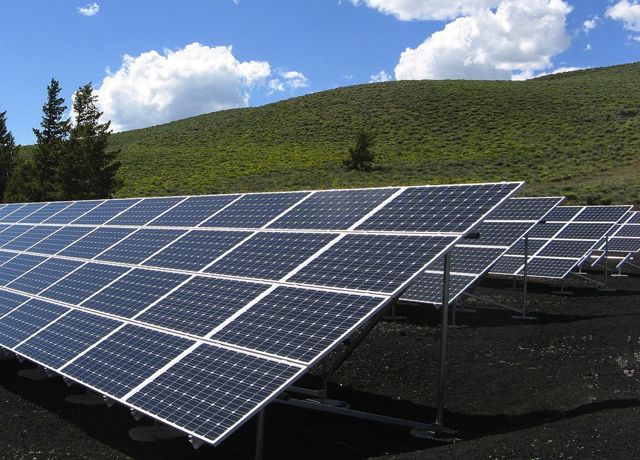
Germany’s Federal Network Agency (BNetzA) has reported 9300MW of renewable energy plants was put into operation in the first half of 2024, largely driven by solar projects in the country.
Taking into account the decommissioning of older plants amounting to 400MW in the same period, total output increased by 5.3% compared to the end of 2023, the agency added.
“We are seeing a continuous expansion, especially in solar systems,” said BNetzA president Klaus Müller.
“Compared to the total output at the end of 2023, almost 10% more solar power was added.
“Two-thirds of this is due to building complexes, which also include the balcony systems. At the end of June, we exceeded 90 gigawatts of installed capacity for the first time.
“This is an enormous development and a challenge for the entire transformation process in the electricity sector.”
The new figures also reveal development of permits for new onshore wind turbines is also positive.
In the first half of 2024 alone, almost 5.6GW of capacity was approved.
This corresponds to an increase of almost 70% compared to the same period last year. In all likelihood, this will once again exceed the total number of permits from 2023 (7.7 GW), said the BNetzA.
In the expansion of wind energy, the first half of 2024 has brought a boost to offshore turbines, added the agency, as 377MW of new capacity went into operation offshore in the Baltic and North Seas.
On land, this boost is still pending. The current expansion rate for 2024 is comparatively low compared to the end of 2023 at 1.5% more capacity and results, among other things, from a strikingly high number of permanent shutdowns of older plants in the second quarter of 2024.
The BNetzA said for every 130 new plants (600MW) commissioned, there are 173 decommissioned plants (230MW). New turbines thus had an average output three to four times higher than the dismantled turbines.
In total, the onshore wind capacity is currently just under 62GW.