


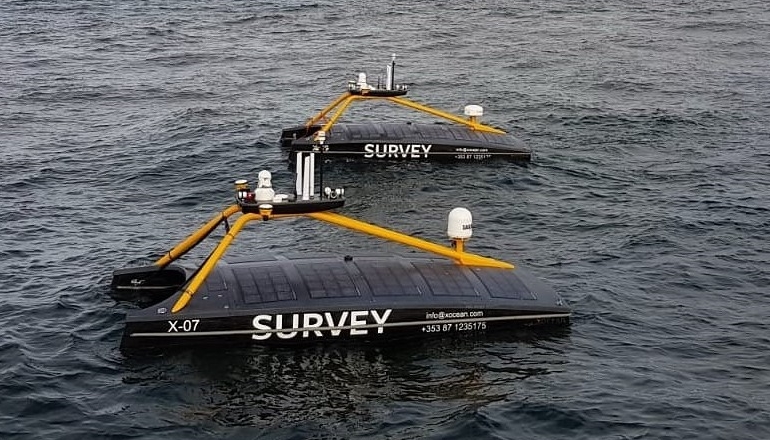
SSE Renewables has successfully completed seabed survey work off Scotland’s east coast using two uncrewed vessels.
The vessels, which were remotely controlled by from the shore, travelled up 40km offshore to undertake survey work for SSE’s Berwick Bank and Marr Bank offshore wind farms.
The XO-450 Uncrewed Surface Vessels (USVs), owned and operated by XOCEAN, performed multiple nearshore and offshore cable route surveys in water depths ranging from zero metres to 60 metres, earlier this month.
The surveys allowed the project team to map a previously unknown rock ridge, located on the seabed and identify an alternative path for export cables.
SSE says that identifying this alternative route early has ensured that there is no requirement for potentially intrusive measures on the rock ridge, such as trenching, providing a much more environmentally friendly outcome for the project and local habitat.
Throughout the survey, the data collected was monitored from shore in real-time by experts located in the UK, to validate data collection before the vessel departed the site.
Chief executive of XOCEAN James Ives said: “Our USV platform has demonstrated itself to be a safe, reliable and low carbon solution for the collection of ocean data. We are delighted to be working with SSE Renewables on this project.”
SSE Renewables geotechnical engineer Rich Holland said: “SSE Renewables are delighted to have worked alongside XOCEAN to complete this logistically challenging piece of survey work.
“These smaller, nimbler vessels have allowed the Berwick Bank project team to identify possible options for our export cable corridors, whilst avoiding damage to the local sea environment.
“We are especially delighted to be using innovative technology with a much-reduced carbon footprint.”