


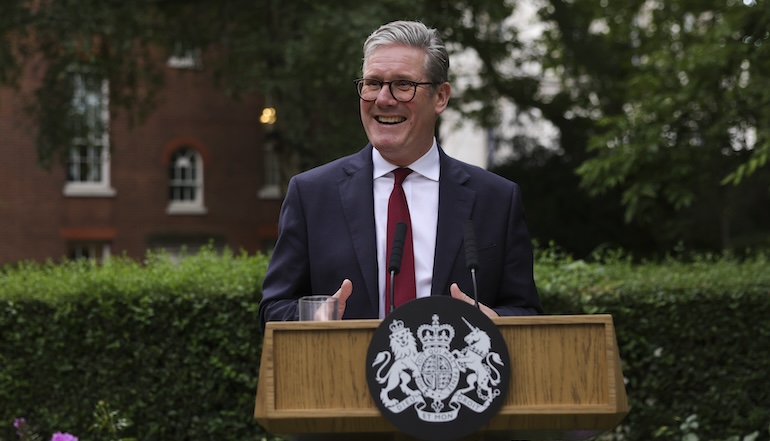
A speech today by the UK Prime Minister Keir Starmer confirmed the Government’s commitment to achieve at least 95% low carbon energy generation by 2030 by accelerating renewables deployment.
Other commitments include reforming planning rules and setting a target to fast track 150 decisions on major infrastructure by the end of the current Parliament.
Starmer said: “Since July 2024, the government has lifted the ban on onshore wind, consented more solar power than over the last 14 years and held a record-breaking renewables auction.
“We have also set up Clean Power 2030, led by Chris Stark, to drive though our clean power agenda, breaking down barriers and accelerating progress on energy projects.
“The forthcoming Clean Power 2030 Action Plan will set out the further steps we will take, including reforming the planning system and building the grid.
“In delivering our next steps, we will do things differently. We will:
“Ensure the economic benefits of clean energy and net zero are felt by workers and billpayers across the country.
“We know that the clean energy transition is one of the economic opportunities of the 21st century, protecting consumers from future price shocks, creating new and innovative businesses, and bringing good jobs to workers.”
Energy UK’s chief executive, Dhara Vyas said meeting this ambition means “overcoming several formidable challenges”.
Vyas said: “The Prime Minister’s speech identified the planning system as one of those and it was welcome recognition of the necessity of streamlining the process for building crucial infrastructure – something that will support the acceleration of domestic sources of clean power.
“A clean power system includes the necessary expansion of other established and emerging clean technologies, including storage and flexibility.
“Alongside tackling the blockers to progress, we must keep the focus on improving things for customers … Improving the energy efficiency of homes and buildings, as well as helping people to switch to cleaner and ultimately cheaper ways of heating and travelling in order to make best use of clean power, is vital.”
Commenting on these commitments, which form part of the backbone of the Government’s “Plan for Change”, RenewableUK’s CEO, Dan McGrail, said: “The drumbeat of policy announcements we’ve seen from Government, which they’ve built on today, is really grabbing the attention of clean energy investors.
“The prize, if we can get the right framework in place to deliver the Prime Minister’s clean power mission, is tens of billions of pounds of investment in renewable energy in the UK, increased energy security for billpayers and thousands of new jobs.
“We could see 100,000 jobs in offshore wind alone by 2030.
“Increasing the roll out of new wind and solar farms in the UK is clearly going to require us to speed up planning approvals, so it’s great to see Government put firm targets in place for the number of major infrastructure projects it will confirm in the next five years.”
Greenpeace UK’s head of politics, Ami McCarthy, said: “Putting the transition to renewable energy front and centre of his agenda is the best way to deliver growth, energy security, lower bills and most importantly tackle the climate crisis.
“The government must, however, look much wider than the power sector and embed these commitments across all departments.
“And in order to maximise the environmental, social, economic and political benefits, it’s imperative that the government actually gets a move on and starts delivering on these promises, or we risk losing out to nations such as China, who are already miles ahead in the clean tech race.”