


Turnover from renewables and low carbon energy in the UK reached nearly £45bn in 2017, according to figures published by the Office of National Statistics (ONS).
The UK low carbon and renewable energy (LCRE) economy grew by 6.8% from £41.7bn in 2016.
The increase was driven by UK businesses classified within electricity production, according to the ONS’s Low Carbon and Renewable Energy Survey.
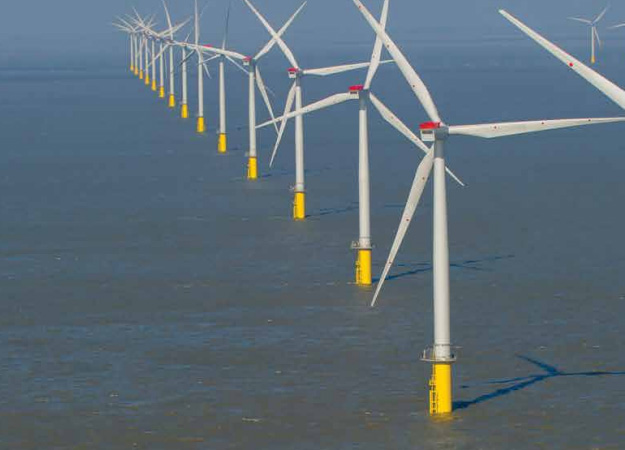
In the energy generation sector, onshore and offshore wind together contributed £6.4bn in 2017.
As a sub-sector of energy generation, bioenergy continued to have the highest turnover in 2017, at £3.8bn, closely followed by the offshore wind, at £3.6bn.
Bioenergy and offshore wind also saw the highest employment at 7400 and 7200 respectively.
Onshore wind saw the biggest fall in both turnover, down £500m from £3.3bn in 2016 to £2.8bn in 2017. Employment in the sector fell also to 2900 in 2017.
Overall the renewable heat sector saw the biggest growth in terms of turnover, to £1.7bn in 2017 from £0.5bn in 2016. This was due largely to increased activity in businesses within the production of electricity industry.
The number of employees working across the entire renewable energy industry and low carbon sector was 209,500 in 2017, compared with 208,300 in the previous year.
Companies working in the energy efficiency sub-sector continued to account for almost half of turnover (£20.7bn) and two-thirds of employment in 2017.
Commenting on the results of the ONS’s Low Carbon and Renewable Energy Survey, Lawrence Slade, chief executive of trade association Energy UK, said: “With over half of the UK’s electricity now generated by low carbon sources, these figures underline how the energy sector has been successful in driving decarbonisation, and creating jobs, boosting economic growth and slashing emissions in the process.
While Slade acknowledged that the UK has been a world leader in cutting emissions and decarbonising its economy, he added: “We must go further and faster if we are to meet our climate change targets and therefore we must be able to fully realise the benefits from lowest cost renewables, including onshore wind and solar.”