


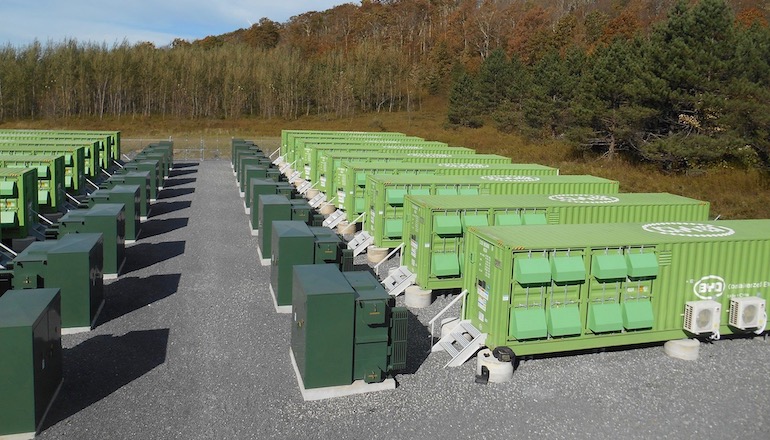
The UK government needs to step up progress on developing flexibility mechanisms in the energy system, such as storage, in order to deliver benefits for customers and help meet the country’s net zero emission goal, according to a new report.
The report produced by Energy UK, in partnership with the Association for Decentralised Energy (ADE) and BEAMA, will be launched later today at a Breakfast Briefing featuring speakers from Ofgem, BEIS and Imperial College, as well as the authors.
It highlights the crucial role flexibility services, like energy storage and demand side response (DSR), will play in reaching the net zero 2050 target and dealing with peaks and troughs in energy demand.
Flexibility will be key to making the most efficient use of increasingly intermittent sources of energy, such as wind and solar, in a low carbon energy system, the report said.
It noted that flexibility will ensure “security of supply and cut the amount that has to be spent on generation capacity and grid reinforcement, as well as give customers the chance to save money – or even be paid – for using energy at certain times of the day and enable them to use electric vehicles to store energy and then supply it for their own uses or sell back to the grid”.
The report cited research by the UK’s Committee on Climate Change that estimated flexibility could deliver savings of £8bn a year by the end of the decade and as much as £40bn a year by 2050.
However, the authors expressed concern that despite widespread consensus on the importance of flexibility and its potential, progress with integrating it into the energy system has been slow and patchy, and the UK risks failing to make the most of the opportunity.
In particular, the government and Ofgem should work with industry to develop a new version of the Smart Systems and Flexibility Plan to accurately measure progress, set specific targets and timeframes and collaborate to ensure delivery of these, they said.
The report also calls for action to amend market mechanisms and regulation designed for the traditional, centralised, one-way energy system and which do not provide the right opportunities to enable investment.
Network operators should also be barred from participating in markets for ancillary services as they risk hampering development of the flexibility market by contracting such services from themselves, it added.
Energy UK head of new energy services and heat Charles Wood said: “A flexible energy system is essential if we are to get anywhere near net zero.
“What’s more, there’s no question of the huge savings and benefits it can bring to us all.
“The products, technology and finance are all there but the opportunities and incentives aren’t – meaning business cases for investment aren’t stacking up.
“Overall demand for power has been falling for some time but the electrification of heating and transport will greatly increase demand at peak times and flexibility will be absolutely essential to cope with this.
“We need to be ready for when that happens which means taking action now – otherwise we risk missing out on the benefits.
“We’re ready to work with the government to deliver on all this potential but we need them to give it the priority it warrants.”
ADE head of policy Caroline Bragg said: “The companies supplying this flexibility stand ready to deliver but while elements of the jigsaw are in place, there are still missing pieces.
“The Smart Systems and Flexibility Plan was rightly acknowledged as a significant step forward when it was published – but progress since then has been too slow and too patchy.
“We now need to go further. Industry is ready to continue working with government on this and, given the right policy framework, to invest in the development and delivery of the solutions consumers want.”
BEAMA head of flexible energy systems Jeremy Yapp said: “There is a risk that the confidence the Smart Systems and Flexibility Plan created will be lost. Our members need clear, decisive action to justify investment into the UK supply chain for the low carbon energy sector.
“The flexibility market will work best if it provides clear revenue streams for all participants.
“We are calling on government to work with Industry on this.
“If we want consumers to adopt low carbon solutions alongside new devices and services that let them become providers of flexibility back to the grid then we need a market that rewards consumers for providing that flexibility and supports the necessary industry investment.”