


The UK government must quadruple its supply of low-carbon electricity to phase out carbon emissions by 2050, according to the Committee on Climate Change.
In its ‘Net Zero: The UK’s contribution to stopping global warming’ report recommending a legally-binding target to cut emissions 100% from 1990 levels, the statutory climate adviser said existing renewables policies would have to be ramped up significantly.
The report sets outs a series of measures and scenarios for the net-zero target to be met, including doubling of electricity demand, with all power produced from low-carbon sources compared to 50% today.
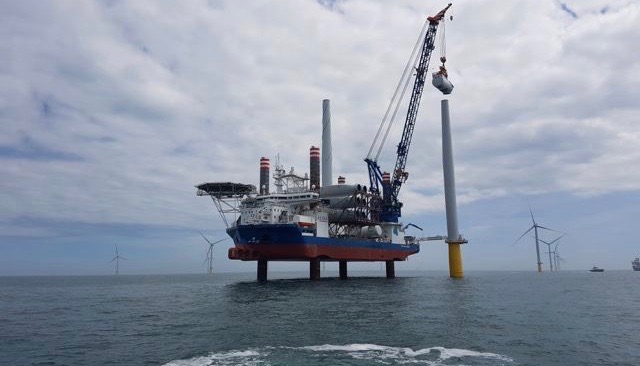
Quadrupling clean power could require 75GW of offshore wind installed by 2050, compared to 8GW today and 30GW targeted by energy department BEIS’ sector deal by 2030, it said.
Responding to the report, ScottishPower chief executive Keith Anderson has urged the government to “urgently remove” the barriers to onshore wind to deliver on the targets recommended by the committee to reach net-zero.
Anderson said: “There is no cheaper form of renewable energy, it is quick to build and we already know it can lower the cost of energy.
Under the UK’s current legally-binding target, emissions must be cut by 80% by 2050.
“Policies must be urgently strengthened and must deliver tangible emissions reductions – current policy is not enough even for existing targets,” it added.
The report pegged the cost of transitioning to a net-zero economy at up to 1-2% of gross domestic product per year to 2050.
“The great news is that it is not only possible for the UK to play its full part – we explain how in our new report – but it can be done within the cost envelope that Parliament has already accepted,” said CCC chairman Lord Deben.
“The government should accept the recommendations and set about making the changes needed to deliver them without delay,” he added.
In response, BEIS said it is “not immediately accepting the recommendations” set out in the CCC’s report but the department will respond “in due course to ensure the UK continues to be a world leader in tackling climate change”.
“To continue the UK’s global leadership we asked the CCC to advise the government on how and when we could achieve net zero,” said BEIS Secretary Greg Clark.
He added: “This report now sets us on a path to become the first major economy to legislate to end our contribution to global warming entirely.”
For more: read the latest industry reaction and Scotland adopting the CCC recommendations.