


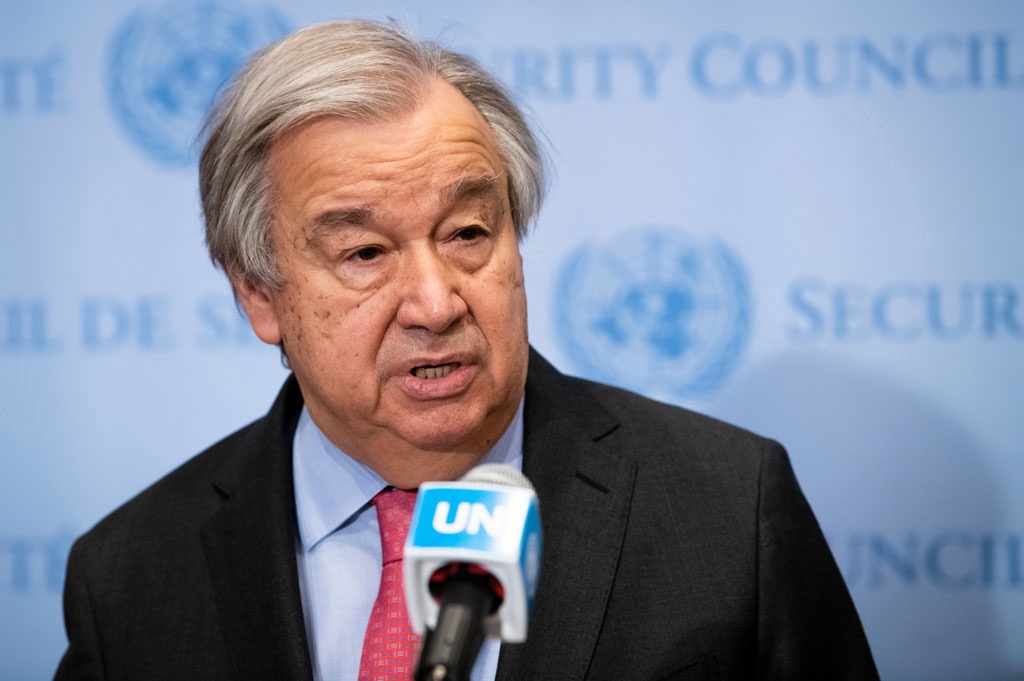
United Nations Secretary-General António Guterres (pictured) has called for urgent action to grab the “low-hanging fruit” of transforming energy systems away from the “dead end” of fossil fuels.
In a video message launching the publication of the World Meteorological Organisation flagship report, Guterres proposed five critical actions to jump-start the renewable energy transition.
They include greater access to renewable energy technology and supplies, a tripling of private and public investments in renewables and an end to subsidies on fossil fuels which amount to roughly $11m (€10.5m) per minute.
He said: “Renewables are the only path to real energy security, stable power prices and sustainable employment opportunities.
“If we act together, the renewable energy transformation can be the peace project of the 21st century.”
The world must act in this decade to prevent ever worsening climate impacts and to keep temperature increase to below 1.5°C above pre-industrial levels, he added.
GWEC chief executive Ben Backwell said: “Wind and solar can transform our energy systems right now at a competitive cost.
“But governments need to act immediately to stack the deck in favour of renewables, not fossil fuels.
“They must remove bottlenecks where projects are held up by unnecessary bureaucracy, permits and a lack of grid connections.
“The Global Wind Energy Council fully endorses this message and appeals to governments and policy makers to take these actions now – we don’t have time to wait for the next wake up call.”
The WMO State of the Global Climate report complements the IPCC Sixth Assessment report, which includes data up to 2019.
The new WMO report is accompanied by a story map and provides information and practical examples for policy-makers on how the climate change indicators outlined in the IPCC reports played out during the recent years globally and how the associated implications on extremes have been felt at national and regional level in 2021.
The WMO State of the Global Climate report, which will be used as an official document for the UN Climate Change negotiations known as COP27, taking place in Egypt later this year.