


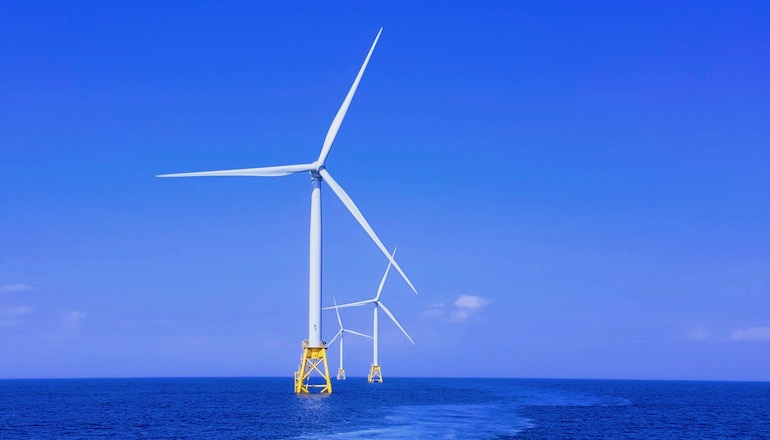
The US states of Massachusetts and Rhode Island have awarded 3 project contracts to procure 2878MW of new offshore wind capacity.
Massachusetts has chosen to contract for 1087MW out of the 1287MW available from Ocean Wind’s SouthCoast Wind multistate project.
It will also take the full 791MW from Avangrid’s New England Wind 1 project, and up to 800MW from Vineyard Offshore’s 1200MW Vineyard Wind 2 project.
Rhode Island has chosen to procure the remaining 200MW from SouthCoast Wind’s multi-state project.
Craig Windram, chief executive for Ocean Winds, said: “Today marks a pivotal moment for New England’s energy future, one where offshore wind will help meet Massachusetts’ and Rhode Island’s ambitious climate goals and the increasing demand for electricity.
“It is also an important milestone for Ocean Winds as we continue to strengthen our activities in the United States.”
SouthCoast Wind will now begin the next steps of negotiating contracts with Massachusetts’ and Rhode Island’s largest electric utilities.
Project construction, which is expected in late 2025, will commence once it has received all federal, state and local permits, and pending final investment decision.
SouthCoast Wind plans to marshal its turbines at the New Bedford (MA) Marine Commerce Terminal, have its operations and maintenance port at Foss Terminal in New Bedford, MA and will open a crew transfer and administrative hub in Rhode Island.
New England Wind 1 will create more than 4,400 full-time equivalent jobs and bring US$3bn of local investment, including a new marshalling port in Salem, MA and a new offshore wind manufacturing facility in New Bedford, MA, Avangrid said.
If a power purchase agreement is signed and approved, then the project can begin construction in 2025 and reach full commercial operation in 2029, it added.
Anne Reynolds, American Clean Power vice president for offshore wind, said: “The offshore wind solicitation awards by Massachusetts and Rhode Island demonstrate the New England states’ strong commitment to this new, clean source of electricity, and mark the first time that states have worked together on awarding offshore wind power contracts.”