


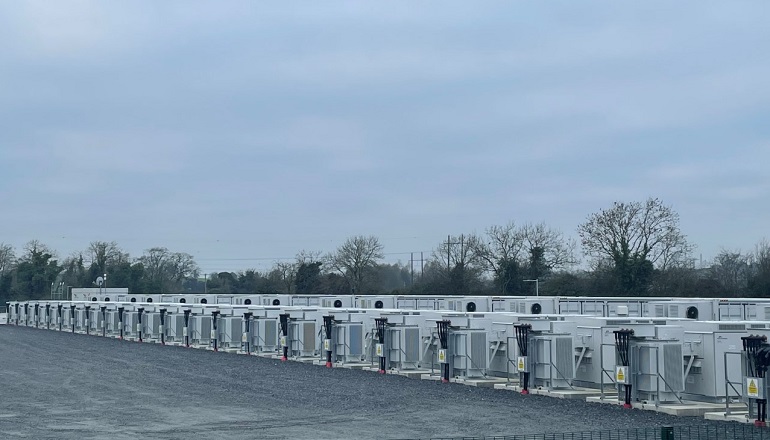
Recent tariff policies in the United States are set to increase the cost of power generation technologies, with energy storage seeing the biggest hike, according to a report from Wood Mackenzie.
Energy storage would be hit the hardest due to its dependence on Chinese imports and could see cost increases of up to 50%, the report warned.
As tariffs create uncertainty in the US power market, development activity is likely to slow down, according to the study, entitled “All aboard the tariff coaster: implications for the US power industry”.
Vice chairman of power and renewables at Wood Mackenzie Chris Seiple said: “In a business with five-to-10-year planning cycles, not knowing what a project will cost next year or the year after is disruptive and causes massive uncertainty for US power industry participants.
“As a result, we could see potential delays in project development and rising power purchase agreement (PPA) prices. We will definitely see impacts on power sector capital projects. The severity depends on what scenarios play out.”
Wood Mackenzie’s P&R Supply Chain Cost Hub tariff calculator was used to estimate the impact tariffs would have on the cost of power sector capital projects.
Tariff impacts are assessed using various inputs, including project and equipment cost breakdowns, as well as US import data.
The analysis looked at two scenarios – trade tensions and trade war. Under the trade tensions scenario, by the end of 2026 the US effective tariff rate settles at 10% with a 34% tariff on China. In the trade war scenario, the US maintains an aggressive tariff policy and implements reciprocal tariffs that result in an overall effective tariff rate of 30% through 2030.
Based on these scenarios, Wood Mackenzie estimates most types of technologies will experience cost increases of 6% to 11%, with utility-scale storage the exception.
In 2024, nearly all battery cells used in US utility-scale storage projects came from China. With the combination of high tariffs on China and US dependence on imports from China, Wood Mackenzie’s P&R Supply Chain Cost Hub estimates cost increases could be anywhere from 12% to more than 50% for utility-scale storage projects, depending on the tariff scenario.
Seiple added: “While US battery cell manufacturing capacity is expanding, it is not expanding at a pace nearly fast enough to meet even a small fraction of battery projects in the US.
“In 2025 we estimate there is sufficient domestic manufacturing capacity to only meet about 6% of demand and by 2030 domestic manufacturing could potentially meet 40% of demand.”
Another effect of the tariffs will be to significantly increase the cost of the US solar market, according to the report. In Wood Mackenzie’s trade tensions scenario, the cost of a utility-scale solar facility in the US will be 54% more expensive than in Europe and 85% more expensive than a new solar plant built in China.