Orkney’s European Marine Energy Centre has secured funding under the EU’s OCEANERA-NET initiative to develop a methodology to improve the reliability of wave and tidal devices.
EMEC will work with the UK’s Offshore Renewable Energy Catapult and SP Technical Research Institute of Sweden to improve reliability testing, with the aim of building robustness into marine energy technology design and performance.
The test site said the Reliability in a Sea of Risk project would establish industry best practice in reliability testing for marine devices through improved load measurements and verification, while increasing safety in marine energy operations.
The industry-approved reliability testing practices developed by RiaSoR will be applied to other ocean energy test sites to ensure consistency and robustness across all wave and tidal technologies, it said.
“Every technology that has been deployed in the extreme wave and tidal conditions at EMEC’s test sites has encountered challenges with reliability and survivability,” said EMEC technical business development manager Elaine Buck.
“For a test site to provide a comprehensive testing service, we need to understand the potential failures as early as possible to reduce the risk, cost and time for the developer. The development of this reliability test programme will be of great benefit to the marine energy developers who utilise our test sites.”
The overall technical approach will be driven by SP Research Institute, harnessing its experience of reliability from the automotive industry.
“We will develop a programme for transferring skills in reliability analysis to marine energy developers through the testing houses,” said SP Technical Research Institute of Sweden project manager Pierre Ingmarsson.
“This will ensure that the practical methodologies developed in this project are taken up by industry and make a lasting impact.
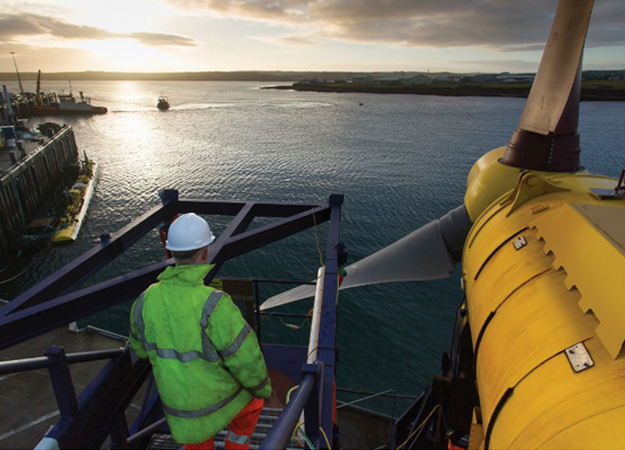
Image: 1MW DeepGen tidal turbine at EMEC (Alstom)