


Scientists in the UK have developed a model to more accurately predict tidal turbine collision rates for fish and other aquatic species.
The model, developed by HR Wallingford, incorporates the real swimming behaviours of different species of fish for the first time, according to the company.
The model has already been used to predict collision rates for silver eels at Strangford Loch near Belfast, Northern Ireland.
A haven for wildlife with over 2000 species recorded, Strangford Loch is one of the highest ranking locations for marine biodiversity in Europe and a migration route for over 15,000 adult European eels (silver eels).
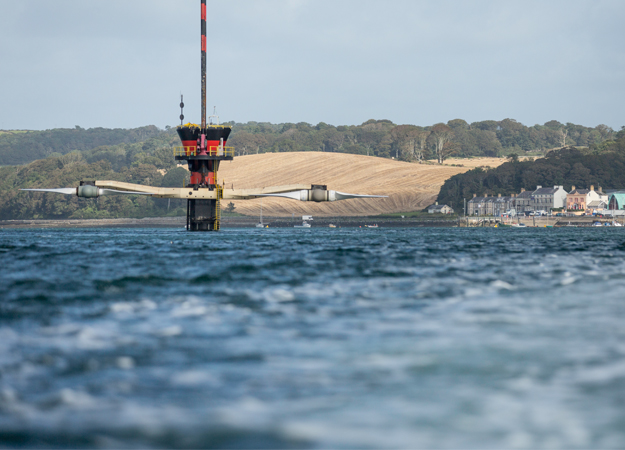
It is also a tidal hotspot and was the site of the world’s first commercial-scale marine turbine project, SeaGen, installed as a pilot between 2008 and 2019.
HR Wallingford project manager Tom Benson said: “Our study looked at the collision rates for silver eels swimming through Strangford Loch as they migrate from the river to the sea.
“There is plenty of evidence to show that eels swim near the surface at night and deeper in the daytime.
“Using this information, we were able to demonstrate that just 0.3% of silver eels would have collided with the SeaGen turbines, significantly lower than predictions using older methods, which would have predicted a 1.1% hit rate.
“In the future, we also hope to include the effect of fish actively avoiding turbine blades.”
The modelling project is funded by HR Wallingford’s own research programme, funding by investing the organisation’s profits.
The research builds on previous HR Wallingford work showing how fish react to underwater noise caused by human activity.