


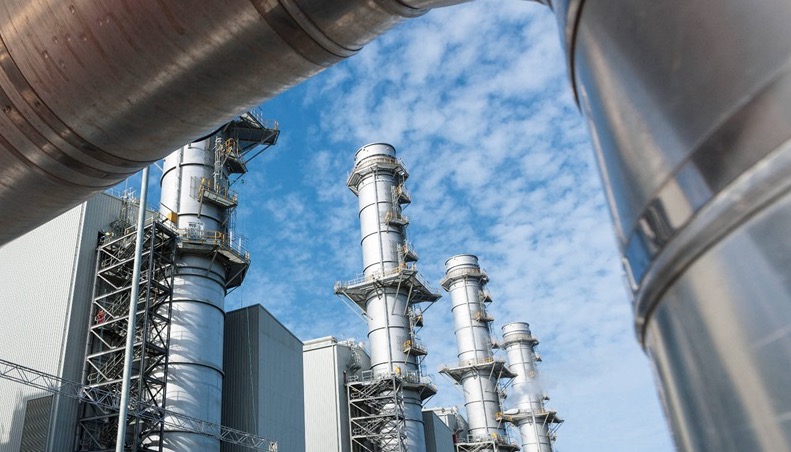
A RWE-commissioned report has found that German developer’s Pembroke Net Zero Centre (PNZC) could create up to 1500 jobs during construction in Wales.
Located at the existing site of the gas-fired Pembroke Power Station (pictured), PNZC will bring together new technologies including green hydrogen, carbon capture, large-scale battery storage and floating offshore wind from the Celtic Sea.
The report by Max Munday at Cardiff Business School found that the project could boost Welsh economic activity with much of this focused on Pembrokeshire.
Benefits are likely to accrue in phases, first during construction and then during operation.
In the medium activity scenario, during construction (assumed to be 2023-2038) the report estimates that PNZC could support annual Welsh construction activity of £46m –£77m per year.
Taking into account wider economic effects, it is estimated that total Welsh annual GVA connected to PNZC would be between £41m and £68m during construction, supporting between 900 and 1500 jobs every year during this period.
The report goes on to demonstrate that, during operation, in the medium activity scenario, direct regional employment by RWE would double, an increase of 95 full time equivalent posts on top of the existing 100 already employed at the Pembroke Power Station.
Taking account of the whole economy effects of operational spending in the local economy, a total of 270 additional Welsh jobs would be supported, and a further £28m of GVA per year by 2040.
Richard Little, who until very recently was the power station manager at Pembroke, has taken on the role as director of PNZC.
He said in the report: “The Pembroke plant has for a long time added far-reaching value into the Welsh economy creating and supporting high quality jobs in the region.
“With the future development of innovative low carbon energy technologies such as hydrogen, carbon capture, battery storage and floating wind from the Celtic Sea, the site has the potential to double GVA and almost triple job creation for Wales.
“Together these technologies will also support RWE in reaching its international goal to be carbon neutral by 2040.”