


A mosaic of habitat spanning more than 180 football pitches is being restored by a renewables developer at a wind farm in South Lanarkshire, in Scotland.
Banks Renewables is restoring the land, previously used for commercial forestry, back to healthy peatland at its Kype Muir wind farm near Strathaven as part of a dedicated 25-year habitat management plan.
Created in collaboration with ecology and forestry experts, the Kype Muir habitat management plan will significantly increase biodiversity and aid the land’s carbon capture properties.
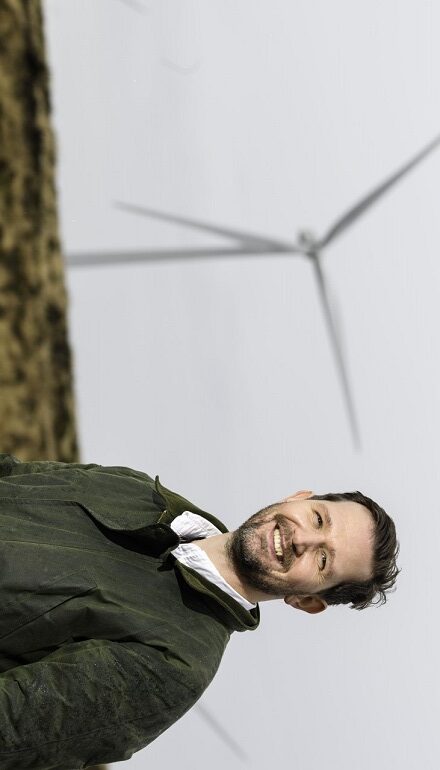
Robin Winstanley, sustainability and external affairs manager at Banks, said: “When the land was commercially forested, large areas were drained to try to help trees grow. “This led to large areas becoming dried out, leading to a loss of some plant and animal species.
“The key focus of our habitat management plan to date is to re-establish the natural soil saturation of the peat in order to encourage biodiversity and restore its carbon capture properties.”
Peat bogs can support a wide variety of animal and plant life including the Black Grouse – a priority species under the NatureScot Species Action Framework.
Healthy peatland is also an effective carbon capture repository – with more than 1.7 billion tonnes, or 140 years’ worth of Scotland’s total greenhouse gas emissions, of carbon stored in Scottish peatlands alone.
Kype Muir’s habitat management plan will be reviewed every year in line with best practice and guidance from NatureScot and South Lanarkshire Council – with the first progress report already yielding positive results.
Winstanley added: “The progress report has already highlighted many positives in terms of habitat creation. “We have removed redundant tree tubes and weeded out commercial trees where necessary to encourage bog restoration and the establishment by peat forming species.
“We have already started to see re-wetting of areas and the emergence of peat forming species. “We’re looking forward to watching the habitat return to peatland.”
Studies suggest that between 1940 and 1980 up to 21% of Scotland’s healthy bog habitats were dried out mainly as a result of afforestation and associated drainage.
In South Lanarkshire, less than 6% of the land is classified as peatland.
Increasing the number of health peatbogs is a key aim of the Upland Ecosystem Action Plan in the South Lanarkshire Local Biodiversity Action Plan.
As part of Kype Muir’s habitat management plan, Banks Renewables will also be planting a number of broadleaf trees to help promote numbers of endangered Black Grouse in the area.
Additionally, Banks Renewables has created or upgraded more than 15 km of on-site access tracks to create a network of paths across the site that are available for people to walk and run on.