


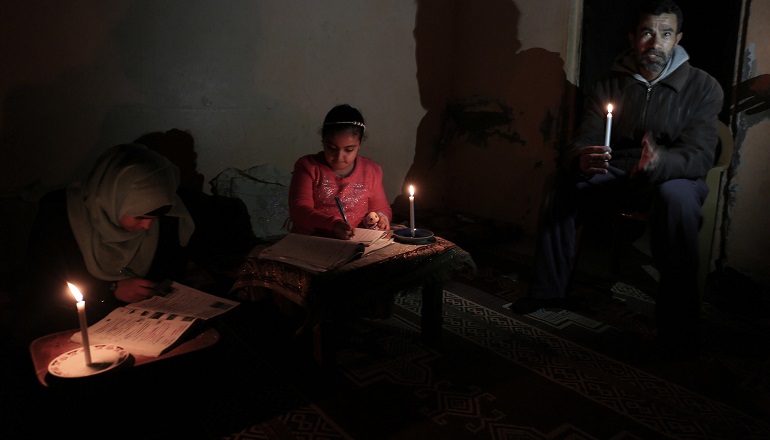
University of Birmingham researchers are developing a new type of distributed solar energy system that will help to provide clean and affordable electricity to people living in the Gaza Strip.
Working with counterparts at the Islamic University of Gaza, the researchers are combining two efficient technologies in a new way that will also help to assess the impacts of electricity shortage on the health and well-being of Gaza’s population.
The new plant integrates highly-concentrated advanced multi-junction solar cells with an organic Rankine cycle (ORC) system that exploits low temperature waste heat from cooling the concentrated PV cells to produce electricity.
The engineering solution brings together the two technologies to achieve an overall system conversion efficiency over 50% – providing clean, sustainable and affordable electricity.
The new system is robust, easy to install, operate and maintain without the need to depend on the complex and expensive national electricity grid.
Project leader Raya AL-Dadah, at the University of Birmingham, said: “Just 38% of Gaza’s electricity needs currently are met.
“People receive less than six hours of power per day, leaving hospitals providing only critical functions such as intensive care units. Coupled with continuous conflict, the energy crisis causes high levels of stress that affect physical, mental health and well-being.
“Our pilot plant will provide electricity for 30 households – enabling the environmental health and human geography teams from Birmingham and Gaza to assess the impact of electricity availability on family health, well-being and gender equality.
“We can learn valuable lessons on how well-being improves by applying the new technological solution.”
The project is funded by the British Academy and brings together researchers from Mechanical Engineering and Human Geography at the University of Birmingham and the Islamic University of Gaza.
The pilot plant for electricity generation will be installed in the Women’s Health Centre associated with the Red Crescent in Jabalia refugee camp, which is surrounded by a number of households, to which electricity will be supplied.