


Envision Energy has carried out a noise-testing initiative to ensure residents living near to battery energy storage systems (BESS) can get a good night’s sleep.
While BESS systems are key to balancing renewable energy generation, grid networks, demand and storage, many are located just metres away from residential communities.
When these “new energy neighbours” sit so close to people’s homes, one question inevitably arises: Will it disturb daily life?
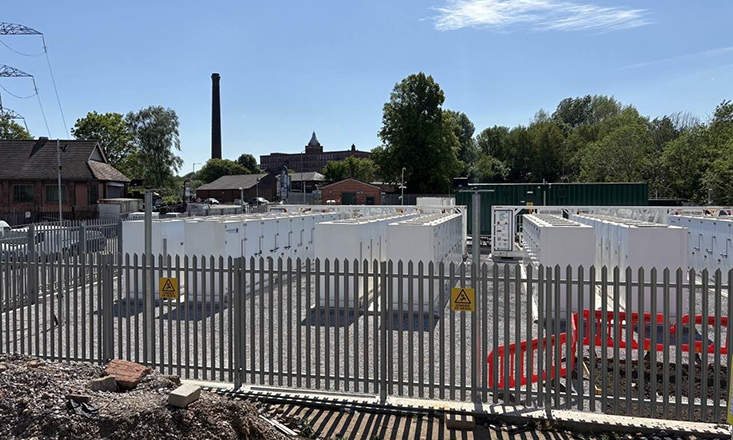
Envision Energy decided to find out the answer – by testing the noise levels at its AC energy storage system (pictured) in Stockport in the UK.
Tucked into the south-eastern fringe of Greater Manchester, Stockport sits where river valleys and housing estates meet.
An Envision spokesperson said: “When you try to squeeze an energy storage scheme into places like this, the kit often ends up barely a stone’s throw from people’s back gardens.
“In the UK – and across Europe and the States – that short gap is treated as a red line: one rumble above the legal limit and the letters of complaint start flying, usually killing the project on the spot.”
To test its BESS system under the most demanding conditions, Envision operated it at full load – a condition typically producing the highest noise levels – during a quiet midnight period.
Field measurements showed that the noise level generated by Envision’s BESS was approximately 5 decibels (dB) lower than the local background noise.
“In other words, during Stockport’s tranquil nights, the large-scale storage equipment blended seamlessly into the environmental background noise, remaining almost imperceptible to residents 100 metres away,” Envision said.
The company said that while noise reduction is a critical part of renewable power systems, many storage solutions in the industry still grapple with high noise levels, particularly on the AC side.
Independent third-party tests conducted at a one-metre distance confirm that Envision’s system-level design keeps its AC storage system operating at full load with noise levels below 58.5 dBA. That is more than 10 dBA quieter than mainstream alternatives – effectively perceived by the human ear as twice as quiet, according to Envision.
The company said that through its innovation in thermal management and environmental control techniques, it had managed to reduce the AC system’s operational noise to “sleep-level” thresholds.