


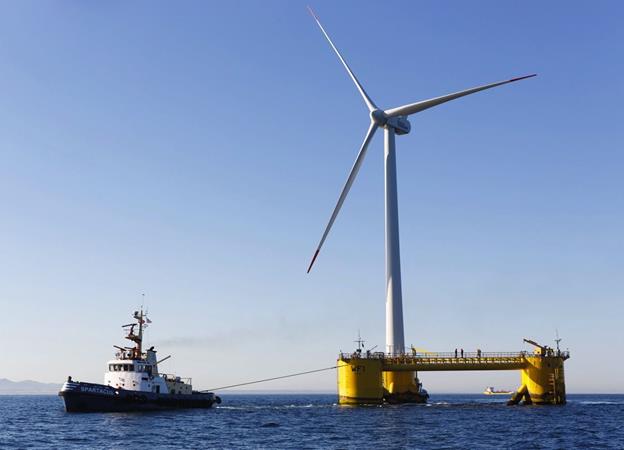
Norwegian Offshore Wind (NOW) has launched a crowdsourcing campaign with innovation scale-up Wazoku, aiming to capture new ways to manage emergencies on floating offshore turbines.
The challenge – Floating Offshore Wind –Safe Solutions for Black Swan Events – is the first of a new NOW partnership with Wazoku. It seeks solutions from sustainability start-ups that safeguard the environment and human lives and ensures the financial stability and operational efficiency of the offshore wind sector.
“Offshore wind turbines are often deployed in high-risk areas, such as seismic zones and shipping lanes, meaning the challenge of managing emergencies is huge,” said NOW Accelerator manager Narve Hansen.
“If a turbine becomes unmoored it could be catastrophic, so finding ways to manage this is vital for the offshore wind sector. I’m excited to see what the Wazoku Crowd can deliver in collaboration with our 380-plus members.”
This is the first challenge run as part of the two-year NOW Accelerator, aimed at start-ups and scale-ups focused on the offshore wind industry. It connects innovators with industry stakeholders, mentors, partners, and investors, and is led by programme members Å Energi and Corio Generation.
Wazoku – which is powering the NOW Accelerator with its Platform and Crowd – works with organisations such as Enel, SunNight Solar, NASA, and many more, helping them crowdsource and manage ideas.
Its open innovation offering is the Wazoku Crowd, a 700,000-strong network of expert problem ‘solvers’, comprised of engineers, technologists, chief executives, start-ups, and more.
Ideas will be accepted at any Technology Readiness Level (TRL), particularly those at TRL 4 (Proof of Concept) or higher. Solutions must exhibit flexibility, scalability, compatibility with North Sea conditions, low maintenance, and longevity.
Innovations showing potential for cross-industry applicability and previous industry engagement will be viewed favourably, said NOW.
The plans must ensure the safety of personnel, protect assets, and preserve the environment, all without necessitating the physical transfer of offshore personnel to these compromised structures. Success in the challenge will be measured by the development of at least one solution that meets the majority, if not all, of the must-have requirements.
“A giant floating wind turbine breaking loose and heading towards a major shipping lane sounds like a disaster movie, but it is a real possibility,” said senior director of innovation ecosystems at Wazoku Schønning Eysturoy.
“Our crowd has a proven track record in solving such challenges. With our collective intelligence and NOW members’ expertise, I’m confident we can deliver something transformative.”
Further NOW Accelerator challenges have also launched. One, led by Danish multinational energy company Orsted is seeking sustainability start-ups to help reduce noise emissions from underwater survey equipment for the offshore wind industry.
Another is led by Seaway7, and will be introducing a pioneering initiative aimed at advancing Floating Offshore Wind (FOW) Mooring & Dynamic Cable infrastructure.
Recognising the complexities of FOW systems, the new challenge addresses crucial issues such as the high costs of installation, logistics, and the need for bespoke solutions that currently hinder scalability and economic viability.
Through this initiative, Seaway7 seeks proposals that integrate cutting-edge technology and smart engineering to revolutionise mooring and dynamic cable systems, ensuring they are robust, reliable, and aligned with global energy transition goals.
The winners of these challenges will present their innovation to the global offshore wind community at Norway’s Floating Wind Days conference on 29/30 May in Haugesund.