


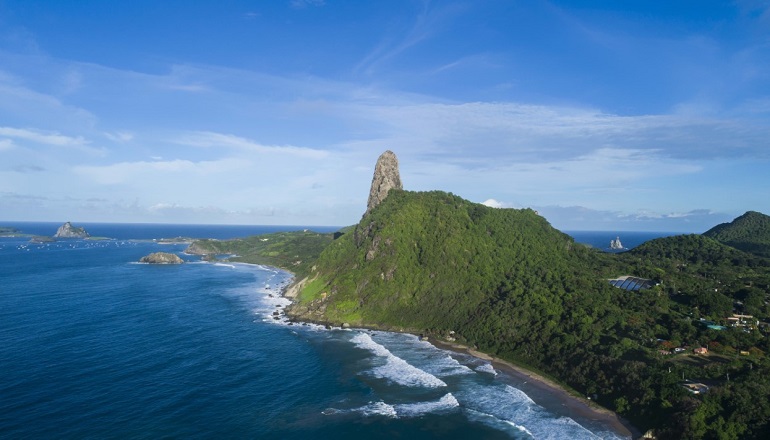
Iberdrola, through its subsidiary Neoenergia, plans to install the company’s first floating photovoltaic project, on the Brazilian island of Fernando de Noronha.
The project will be built on the water surface of the Xaréu dam on Fernando de Noronha, recognised by UNESCO as a World Natural Heritage Site.
It will join other sustainable energy solutions, including electric mobility and clean energy generation projects, that Iberdrola is developing on the island.
This initiative is being implemented together with Companhia Pernambucana de Saneamento (Compesa), which operates the water and sewerage distribution network across the island, and with the support of the Energy Efficiency Programme managed by the Brazilian National Electric Energy Agency (Aneel).
With 630kW of installed capacity, the floating plant will generate around 1240 megawatt hours (MWh) of green energy per year, enough to cover more than 50% of Compesa’s energy needs on the island.
The installation will have around 940 panels.
The construction of this project, which is expected to begin before the end of the year, will require an investment of €2m.
The development of its first floating solar power plant will allow the Iberdrola group to test this new technology and analyse its possible expansion.
This plant joins other sustainable projects developed by the company to provide renewable solutions and promote the preservation of the island’s biodiversity, the only inhabited island of the volcanic archipelago located in the north-east of Brazil, in the Atlantic Ocean.
Among these initiatives is the recently inaugurated Vacaria solar plant.
This is the first of two solar farms, each with a capacity of 50kW, designed to exclusively supply electric vehicles.
In the event of a surplus, the energy will be fed into the distribution grid.
The construction of these facilities is part of the ‘Senda Verde’ project developed by the Iberdrola group as part of the Aneel R&D Programme, in which it has partners such as Renault and the Centre for Telecommunications Research and Development (CPqD), among others.
Thanks to this initiative, the island already has ten electric vehicles for tourists and district administration uses. In addition, 12 new charging points are planned to be installed at strategic locations.
The company also intends to promote the use of electric bicycles by tourists and residents at Fernando de Noronha, which has an area of approximately 17 square kilometres, and it has begun installing 24 charging points at four separate stations.
The energy consumed by the equipment – which will be donated to the Pernambuco State Government – will be generated by solar panels installed on the roofs of the structures, which will allow them to be used free of charge.