


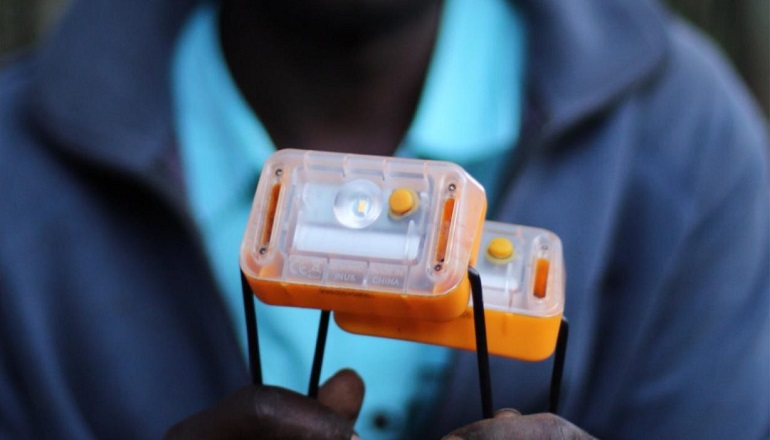
The first carbon credits have been issued for Namene Solar’s climate project in Zambia, which replaces fossil fuel-based lighting with portable solar lights.
The first 546 Verified Emissions Reductions (VERs) are listed in the Gold Standard Impact Registry, each representing one tonne of CO2 emissions reductions achieved during the initial monitoring period.
The project is set to distribute 652,000 of Namene Solar’s pico-solar lights to rural homes living off-grid.
Every solar light distributed as part of the company’s climate project reduces 92kg of CO2e per year, by replacing kerosene lamps and other fossil fuel sources like candles used for lighting.
In addition to the carbon reduction, the social and environmental impact of each light is significant and lasting.
During the project’s initial monitoring period, 12,760 solar lights were distributed, bringing clean light for the first time to over 56,000 people in rural areas.
Collectively, families impacted by the solar lights have already saved over $95,000 on fuel costs for lighting and every household will continue to save annually on their fuel expenses.
To date, 546 tonnes of CO2e emissions have been avoided.
Once the project achieves full implementation, it will benefit 1.5 million people in Zambia and result in millions of dollars in savings for families.
Bernardo Lazo, Namene Solar’s Director of Sustainability, said: “With our scalable climate projects, we can directly contribute to Sustainable Development Goal 7 by unlocking the carbon value of solar lights and improving the quality of life for millions of people living without electricity.”
The project is certified by Gold Standard to meet the highest standards of the voluntary carbon market.
The carbon credits issued are the first for the company, which is rolling out projects across several Sub-Saharan African countries, which each project issuing up to 60,000 carbon credits annually for at least five years.