


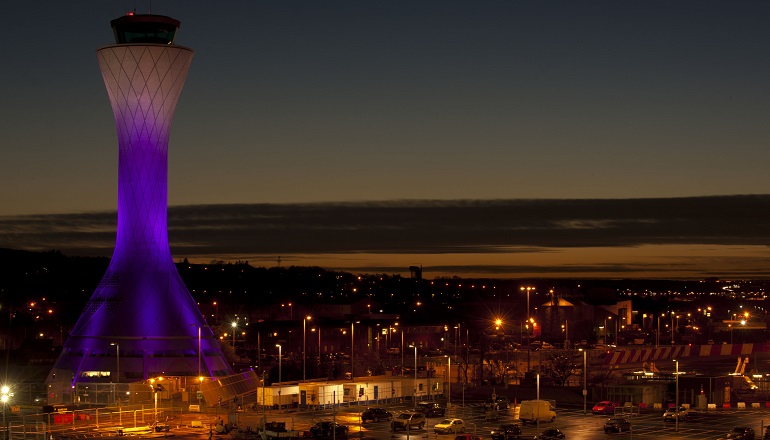
A partnership between Edinburgh Airport and Orsted will set out plans to decarbonise the airport and accelerate the shift to sustainable air travel.
The parties have signed a Memorandum of Understanding (MoU) to work together to map out steps to reduce emissions at Edinburgh Airport and meet its net zero by 2040 vision.
They will identify the most effective and affordable options for Edinburgh Airport and work with Scottish and UK Governments on the changes to regulations and policy required to introduce them, needed to deliver net zero by 2040.
This will include proposals for hydrogen production facilities powered by offshore wind to support decarbonisation.
The partnership will see Orsted and Edinburgh Airport work together to decarbonise the energy used in the airport itself, the energy used by the vehicles that are used to operate the airport, the energy used by the vehicles getting passengers and goods to and from the airport and the fuel being used by the aircraft using the airport.
It’s hoped it will provide a template for other airports around the world.
Gordon Dewar, chief executive of Edinburgh Airport, said: “The aviation industry realises the part it plays in emissions and the need to move towards a cleaner, more sustainable future.
“We have made huge advances in technology and we want to continue to innovate and ensure aviation’s future is one that is decarbonised and contributes positively to our economy and Scotland’s net zero ambitions.”
Duncan Clark, head of UK region at Orsted, added:
“Whilst we have made huge strides in decarbonising the way we generate electricity, the next stage is to use that renewable electricity to decarbonise industry and transport.
“This will involve renewable energy companies collaborating with forward-looking companies such as Edinburgh Airport.
“Renewable hydrogen is key to decarbonising heavy transport and air-travel and look forward to working together on this exciting technology.”