


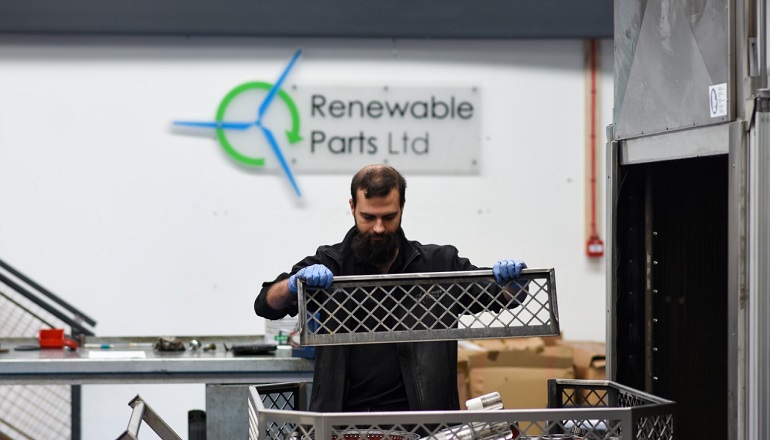
SSE Renewables, Renewable Parts Limited (RPL) and the University of Strathclyde are cooperating to help develop a circular and sustainable wind sector in the UK.
The partnership will address ways to reduce the industry’s carbon footprint – while the majority of minor components in a wind turbine can be reused, remanufactured or refurbished, most replacement parts are still sourced new.
A memorandum of understanding (MoU) between the partners outlines how they will explore a number of areas together, including securing a world-leading UK-wind circular economy sector deal, supporting SSE’s delivery of its net zero ambitions by “increasing the circularity” of its 2GW of operational onshore wind assets and developing a strategy to reduce waste from SSE Renewables’ wind farms at the end of their life.
The partnership plans to develop sustainable supply chains through research and innovation with a range of partners, with the aim of establishing Scotland as the advanced research and development centre for wind turbine component remanufacture within the UK.
This will support the reduction of carbon emissions of renewable energy assets, as well as support supply chain resilience and generate new, skilled jobs for the UK.
SSE Renewables managing director Stephen Wheeler said: “This MoU sends an important message that SSE Renewables is serious about making sure renewable energy is truly sustainable. For SSE Renewables, sustainability is right at the core of our business strategy.
“We’ve recently appointed a new Head of Sustainability to our executive team, and we’re taking action to power sustainable change across our development and operational activities while championing a fair and just transition to net zero.
“Delivering on the ambition of this new partnership with the University of Strathclyde and Renewable Parts to develop sustainable supply chains and a circular economy in the UK wind sector is a significant step forward on our journey to net zero.
“This partnership will also help create highly-skilled, high-quality jobs and value for people across Scotland and the UK too.”
RPL chief executive James Barry added: “Decarbonisation of the supply chain through the application of parts remanufacture presents one of the greatest opportunities to increase sustainability and reduce environmental impact.
“This co-investment in new technology will not only enhance operational performance, but will create many new, high skilled jobs in the renewables sector within the UK economy.”