


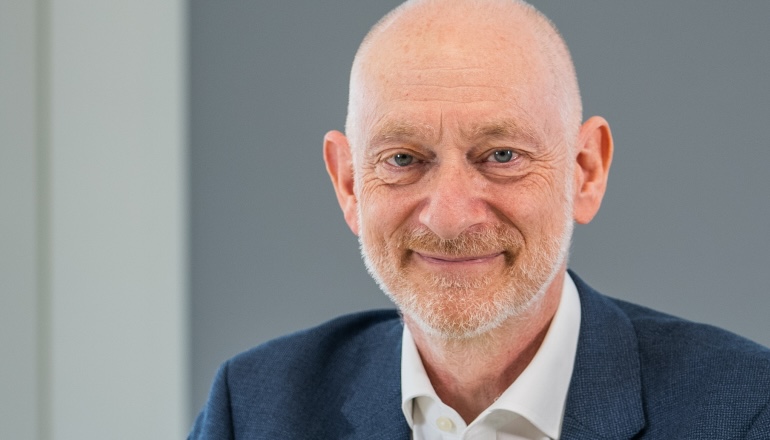
2026 has got off to an attention-grabbing start for UK offshore wind, writes Orsted head of UK Benj Sykes (pictured).
Last month’s AR7 results speak for themselves, with more than 8GW of CfD-bearing projects added to Britain’s burgeoning offshore wind sector, alongside the 16.6GW already delivering power to the grid, and 11.7GW in construction.
The results mark another step towards a clean, secure and diverse future energy system but those CfDs mark the firing of the starting gun – with much work to be done to reach the finish line. Contracts for Difference are just that; contracts. We now need to see them delivered on time and on budget, and as a sector we must be sharper than ever on execution, as well as continuing to mature the pipeline of projects for the future.
If the last few years in the offshore wind industry have taught us anything, it is that the goal for everyone involved in delivering offshore wind must be: first, to rapidly deliver good-value, secure renewable power onto the system to ensure consumers can benefit as quickly as possible. Second, to achieve an end-to-end system which allows developers to bid competitively in CfD auctions – this requires confidence that projects can be delivered on time and in line with assumptions made in the business case.
We have some amazing projects in construction in the UK offshore wind sector including our own Hornsea 3, East Anglia 3, Sofia and the A, B and C zones of Dogger Bank Wind Farm. But the challenges of construction and commissioning are becoming all too evident, and much work remains to be done to predictably turn contracts into generating assets.
This is all to say that allocation rounds are important – they’re a large part of what’s put Britain in a leading position in offshore wind – but there are many more factors at play when delivering these complex projects.
We at Ørsted are not immune to these types of challenges. We have had to make tough decisions, including putting Hornsea 4 back into development, meaning we know that being awarded a CfD is not the end – merely the end of the beginning.
Looking forward, our Hornsea 3 Offshore Wind Farm will make a huge contribution to the UK’s home-grown renewable energy as well as our energy security. The onshore element of this £8.5bn project is progressing well and this year we start offshore construction.
The execution of such a large and complex project is only possible because of seamless integration between our project team and our supply chain partners. We must never underestimate the experience and skill necessary to deliver the world’s single largest offshore wind farm, coordinating the multitude of contractors and sub-contractors working across all scopes. Work is also split between different suppliers, depending on expertise and size of scope, with, for example, array cables being supplied by both Prysmian and Hellenic and the cable protection system by Balmoral. For monopile production, due to the 197 required we are working with 4 different suppliers: Dajin, EEW, Haizea and Steelwind.
The extent and range of production for such a large project calls for a variety of different manufacturers. This allows us to manage risks around our schedule and milestones as a project of this size and complexity has many moving parts, all of which are reliant on one another.
Of course, risks to large and complex offshore wind farm construction projects don’t just come from the supply chain. For these projects to move from CfD to COD the whole infrastructure of execution needs to perform reliably and predictably. This includes the vital elements of timely grid delivery and the ongoing, timely delivery of consents. The need to move from words to tangible actions has never been more pressing –if developers are to build the wind farms needed for the government to reach its ambition of 95% clean power generation by 2030. Against that backdrop, it’s clear that delays or uncertainty are extremely unhelpful – for example the announcement of NESO’s Connections Reform process was warmly welcomed by the industry. However this process is now stalled which is not helpful for projects that are already in progress and scheduled to deliver power in the next couple of years.
Building national infrastructure projects like offshore wind farms requires a complex ecosystem of consenting, grid, supply chain, community engagement and a range of other factors to deliver what is needed at precisely the time it is required. And as I’ve said, time is the crucial element here as unforeseen delay in any piece of the puzzle introduces both risk and cost, which is why the latest news on Connections Reform is so problematic for the sector. For us and for the industry, 2026 is a pivotal 12 months that will determine how the UK continues to scale up the delivery of offshore wind responsibly to meet the UK’s energy and economic needs. Long-term success depends on the right conditions to ensure the UK retains its global leadership.
So, what are those conditions?
To deliver the next generation of projects, there are some key requirements for success:
· An efficient and predictable planning system, with strong environmental protections built in, that is designed to avoid disruption to the construction schedule post FID.
· Delivery of a modern, flexible and resilient grid capable of connecting and integrating large volumes of renewable power on time. It is vital that projects moving through the system can rely on their grid connections to ensure that the renewable energy they generate can reach homes and businesses across the UK.
· Support for a competitive, innovative supply chain that can grow with the industry.
· Industry working closely and collaboratively with communities, to the benefit of both.
Success comes not just in awarding and winning bids but in building and then operating our windfarm fleet. We look forward to playing our part and working with Government and industry colleagues to deliver for Britain.