


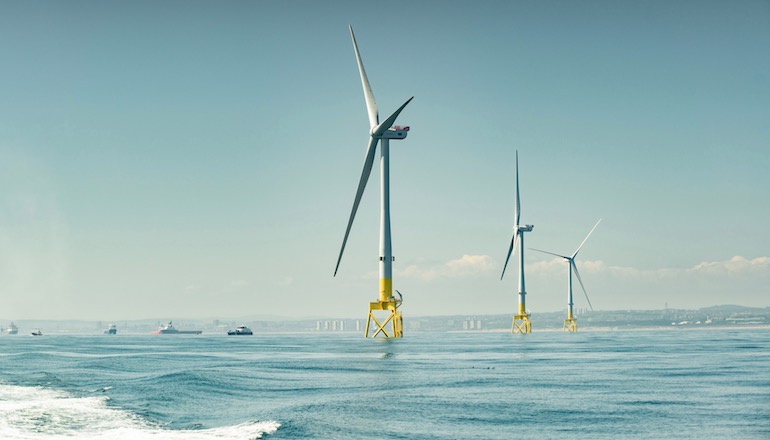
Vattenfall is seeking specialists to bid to take part in a cutting-edge study of bird behaviour at the 93MW Aberdeen Bay offshore wind farm off the east coast of Scotland.
The collision avoidance research will monitor birds flying in the vicinity of all 11 turbines at the project, which is also known as the European Offshore Wind Deployment Centre (EOWDC).
It is part of the EOWDC’s €3m scientific programme, which aims to understand the environmental impacts of offshore wind, and is supported by a panel of experts including RSPB Scotland, Joint Nature Conservation Committee, Marine Scotland Science and Scottish Natural Heritage.
The bird study will start in Spring 2019 and run for two or three years, focussing on the northern gannet, black-legged kittiwake and large gulls such as the great black-backed and herring gull.
Vattenfall UK country manager Danielle Lane said: “Yet again the EOWDC demonstrates its cutting-edge credentials with this significant investment in seabird research.
“The industry, decision makers and ornithology specialists rightly take great care when assessing the impact of offshore wind turbines on bird populations. The more data we have, the more confident that decision making can be.
“That’s why we expect this research, combined with others, to boost understanding and improve collision prediction models. This will go a long way to helping smooth the path for fossil-free offshore wind to make a telling contribution in the fight against climate change.”
RSPB Scotland senior conservation scientist Aly McCluskie said: “The EOWDC research programme has already produced important results and this latest call for bids will hopefully facilitate research that will shed light on bird behaviour and collisions at offshore wind farms.
“There is currently considerable uncertainty in our understanding of how birds behave in the vicinity of wind turbines, and we need to greatly improve this understanding in order to be able to accurately predict and prevent adverse impacts on bird populations.
“The UK is currently undergoing an unprecedented expansion in offshore wind farm development and while we welcome the urgent transition to renewable energy to tackle climate change, it is crucial that this should not be at the expense of our wildlife.
“This project will help to fulfil our ambitions for offshore renewable deployment to happen in harmony with nature.”
Aberdeen Bay features two MHI Vestas V164 8.8MW turbines and nine 8.4MW machines. It was officially opened in September.