


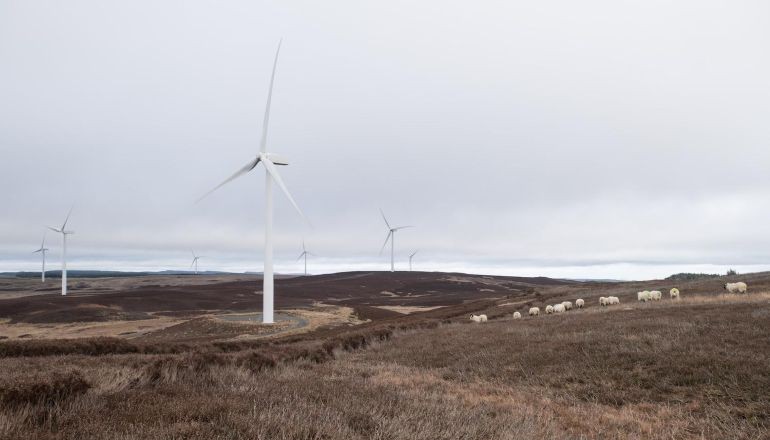
Vattenfall is investing €50m in 2020-2021 in solar power and energy storage projects that also promote local ecological systems and biodiversity.
“Our aim is always to pursue designs that include nature,” said Vattenfall environment manager Puck Sanders who works in the developer’s solar and batteries business.
The solar development team uses three factors when developing projects to support biodiversity.
The first is location selection. Sanders said: “Vattenfall follows the guidelines of the ‘Onshore solar code of conduct’ issued by industry association Holland Solar.
“This means that we do not develop projects within the EU’s Natura 2000 areas, and we always work in dialogue with the immediate environment as well as other stakeholders to look at how we can integrate the project into the landscape as effectively as possible.”
After the site has been chosen, engineers start looking at how they will design the solar farm.
The greatest threat to biodiversity comes from an installation casting too much shadow.
Virtually all vegetation and plants require a certain amount of sunlight. Some plants can grow even if they receive less than three hours of sunlight or if the light is diffused, through trees or foliage.
Sanders said: “Unfortunately, there is little diffuse light available under the solar panels.
“Thus, if the solar panels are installed facing south, this boosts the light yield and gives those plants under the panels more space to grow – which aids biodiversity.”
“Another advantage of setting things up this way is that it allows enough sunlight to penetrate the space underneath the panels,” says Annemarie Schouten, business lead large-scale solar at Vattenfall.
“Installing the panels the right way, among other things ensuring optimum drainage, requires a balance between the inclination angle of the panels themselves, the distance between the individual rows, and the height of the panels.
“It is not recommended to have a whole field full of solar panels, as this inhibits plant growth and therefore reduces biodiversity,” she added.
The third criteria is establishing an ecological strategy adapted for each location.
Vattenfall works with various, often local, partners: ecological consulting firms, nature and environment organisations and knowledge institutions, for example.
They advise on the best design and recommend nature and landscape management measures.
Schouten said: “Each site is unique, which is why we work with local partners to develop a plan that contributes to a balanced ecosystem.
“For example, we make decisions based on their recommendations on how to ensure a healthy mix of local indigenous plants and flowers that have a positive influence on insect, reptile, bird and small mammal populations.
“We do not use any fertilisers or chemicals, we allow grazing animals to use the site in autumn and winter, and we install bee hotels and birdhouses where possible.”
Agreements are reached with landowners that after 25 years (the approximate useful life of solar panels) the land will be used for agricultural purposes once more.
“In 25 years’ time, the land that was initially characterised by monoculture becomes a spot with a huge amount of biodiversity,” Schouten said.