


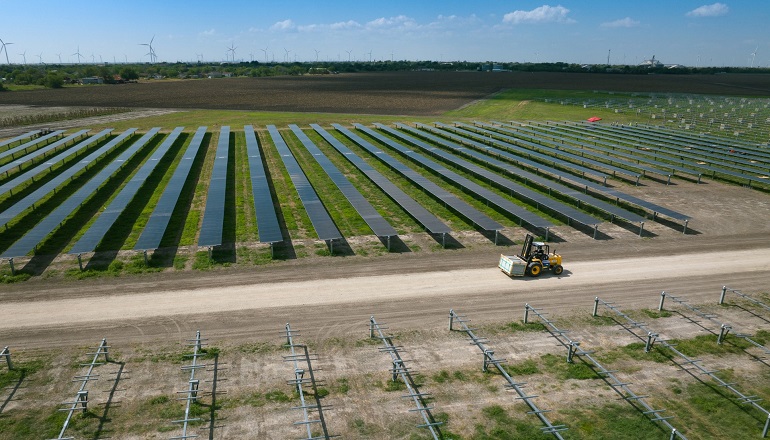
BP has started construction on its 187MWdc Peacock Solar project in Texas.
Located 10 miles north of Corpus Christi in San Patricio County, Texas, Peacock will sell all of the electricity it generates under a long-term power purchase agreement to Gulf Coast Growth Ventures (GCGV).
GCGV is a joint venture between ExxonMobil and Saudi Arabian plastics producer SABIC.
BP’s 50:50 joint-venture partner Lightsource BP is developing the project and managing the construction on behalf of BP.
PCL Construction, the main engineering, procurement and construction contractor for the project, will install ultra-low carbon solar panels and trackers from US-based manufacturers First Solar and GameChange Solar, respectively.
Located near the GCGV complex, Peacock will supply power directly to the facility.
The project is expected to create around 300 jobs during construction and provide more than $25m in tax revenue over the first 25 years of the project’s life.
“Securing this agreement and kicking off construction of Peacock helps support the transition to lower carbon energy, while benefiting local communities and the economy,” said Dave Lawler, BP America chairman and president.
“It’s another way bp is accelerating growth of our US solar generation capacity, investing in America, and advancing our transformation to an integrated energy company,” he added.
Paul Fritsch, president of GCGV, said: “Once online, the solar-generated electricity will be used to partially power our plant and help reduce emissions in support of a net zero future.”
Peacock will also be home to a range of agricultural and biodiversity activities, including planting vegetation under and around the solar panels, including native plant species beneficial to pollinators and other wildlife as well sheep grazing.
Such practices are known as agrivoltaics.
Peacock is part of BP’s aim to invest in and build renewable energy capacity of 50GW by 2030.
According to the Solar Energy Industries Association, Texas ranks second in the nation for solar power and is poised to grow, with more than 40GW of capacity expected to be installed over the next five years.