


European Energy and UK-based renewables outfit Firma have revealed they are developing a portfolio of solar projects, upwards of 200MW, in the UK.
The partners are working on 30 separate deals with farmers to build solar farms and grid-connected battery storage systems across the country.
The partnership is combining European Energy’s experience of “safely and responsibly” developing Solar PV, including the biggest solar farm in northern Europe, with the “local expertise” of Firma to create a portfolio of solar PV opportunities for investment in the UK to benefit landowners, communities and the climate, the companies said.
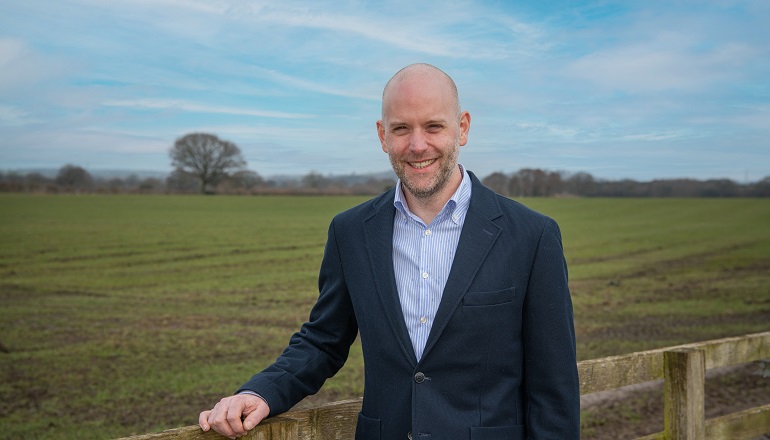
Firma founder and managing director Rufus Salter (pictured) said: “Our link-up with European Energy, one of the leading global renewable energy companies, was built on my previous company Norstar’s partnership with European Energy.
“Norstar was a diversified business with property development and renewable energy interests, we decided to form Firma as a distinct standalone business consolidating our green energy interests.
“Firma was born out of a desire to focus solely on the delivery of onshore renewable energy projects across the UK with strong partners like European Energy. Having looked at European Energy’s business model and development plans, and then talking to them, I knew at once that we could develop a successful partnership.
Salter said the partners have “hit the ground running”, with 30 agricultural sites, primarily in the north of England, at various stages of development.
“We have found farmers very receptive to our risk-free offer to build solar farms on land which is currently under-used.”
He said that the solar farms would be installed and commissioned on agricultural sites of 50 acres or more, as one contiguous block or separated by hedgerows, and leased, with annual rent reviews, for 30 years.
The companies are “considering grid-connected battery storage projects as both stand-alone installations and co-located with solar sites” to help manage and balance the grid to ensure the “crucial stability of supply”.
They are also considering alternative technologies to allow green energy projects to deliver fuels such as hydrogen and methanol, Salter said.