


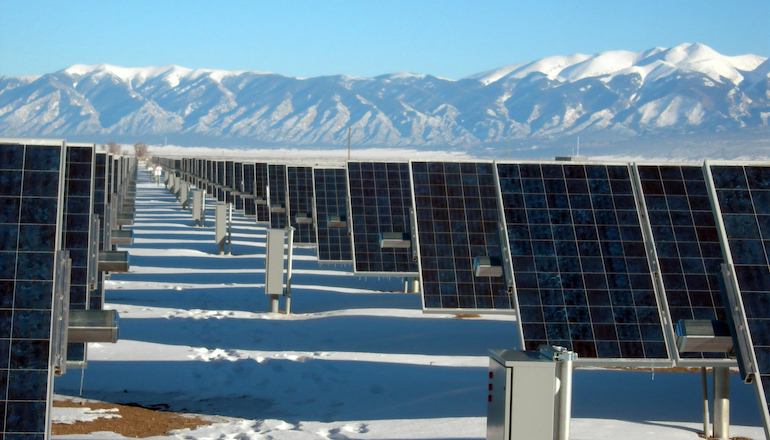
Masdar is proceeding to the construction phase of three solar projects in Uzbekistan, totalling 900MW, having achieved financial close on the sites.
Financing for the Sherabad (457MW), Samarkand (220MW) and Jizzakh (220MW) projects is being provided by the Asian Development Bank (ADB), Asian Infrastructure Investment Bank (AIIB), the European Bank for Reconstruction and Development (EBRD), and the European Investment Bank (EIB).
In 2021, Masdar signed agreements with Uzbekistan’s Ministry of Investments, Industry and Trade, and the JSC National Electric Grid to design, finance, build and operate three utility-scale solar projects.
The projects are expected to begin operations in 2024.
The Dutch Entrepreneurial Development Bank, FMO, and ILX are acting as B loan participants.
Masdar’s chief financial officer Niall Hannigan said: “Reaching this milestone for all three projects is a proud moment for Masdar and a key stage for Uzbekistan’s clean energy journey.
“Masdar is already playing a significant role in supporting the Government of Uzbekistan’s ambitious renewable energy objectives, and we look forward to continuing to grow our portfolio of projects in this key strategic market.
“This achievement would not have been possible without the support of the Government of Uzbekistan and the International Renewable Energy Agency, as well as our financial partners, who have demonstrated unwavering commitment to driving sustainable economic growth for the people of Uzbekistan.”
Masdar signed an agreement during last year’s COP27 climate conference to join IRENA’s Energy Transition Accelerator Financing (ETAF) platform, with the intention of potentially deploying up to $200m equity investment on renewable energy projects.
Masdar and AIIB have committed capital to the Uzbekistan projects under the ETAF initiative. ETAF is a multi-stakeholder climate finance platform, targeting the deployment of 5GW of new renewable power in developing countries by 2030.
Uzbekistan is targeting the development of 7GW of solar and 5GW of wind capacity by 2030.