


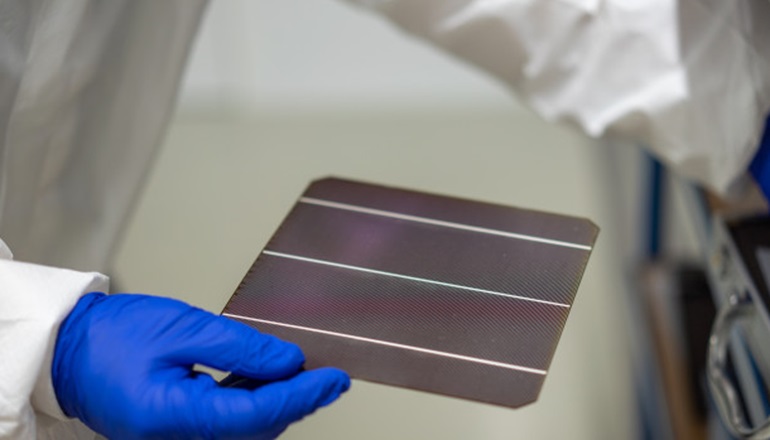
Oxford PV, a UK company developing next-generation photovoltaic cell technology, has achieved a 25% conversion efficiency.
Commercialised silicon-based solar cells typically achieve conversion efficiencies of 24%.
Solar modules made from higher efficiency cells generate more power over the same area, reducing the cost of electricity and further accelerating the adoption of clean energy.
Oxford PV, a spin-out of the University of Oxford, is focused on commercialising perovskite-on-silicon tandem solar cells, which have a theoretical maximum efficiency of over 43%, compared to less than 30% for silicon solar cells.
In 2024 Oxford PV intends to scale-up manufacturing and continue to progress plans for a new factory to produce its tandem solar cells in high volumes.
Chris Case, Chief Technology Officer, Oxford PV, said: “Solar energy is currently among the most cost-effective and sustainable energy sources.
“Our continuous advancements in technology will further enhance module efficiency – producing more electricity from the same area – and extending their use to all market sectors from residential, commercial through to utility scale.
David Ward, Chief Executive Officer, Oxford PV, said: “This new world record is a crucial milestone for Oxford PV, proving that our tandem solar cells can deliver record-breaking performance when assembled into solar panels.
“It is the first step in what will be a transformative 2024, as we begin to deliver market-ready panels from our factory in Germany and continue our global search for a new high volume manufacturing site which will enable us to bring our technology into the mainstream.”