


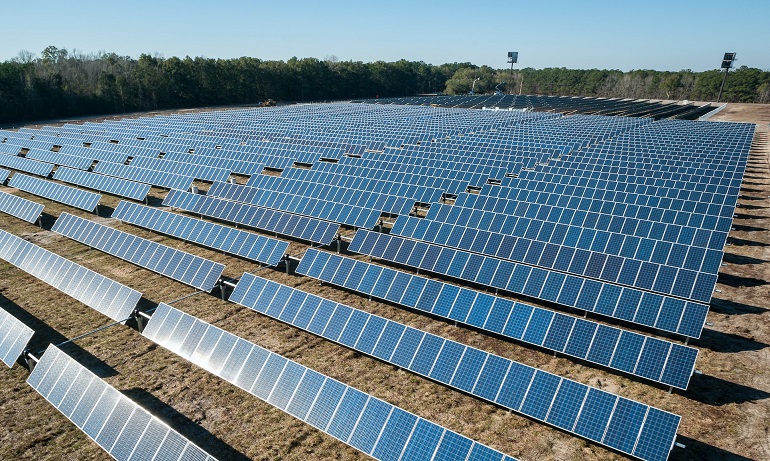
Solar provided half of the US generating capacity added in 2023 with almost 5GW coming online in December alone.
In its latest monthly “Energy Infrastructure Update” report (with data through 31 December, 2023), regulator FERC revealed that in 2023 solar provided 18GW of new domestic generating capacity or 49.3% of the total.
According to the data, reviewed by the Sun Day Campaign, this is more than any other energy source and more than the combined new capacity from natural gas (11,024MW) and wind (6356MW).
Moreover, solar capacity additions in 2023 were 50.0% greater than the year before.
Capacity additions by solar in December alone set a new monthly record and accounted for 57.1% of new capacity placed into service.
That is more than double the previous monthly record of 1982MW set just the prior month.
The balance of new capacity in December came from wind (1931MW), natural gas (1810MW) and hydropower (2MW).
The mix of renewables thus provided 79.2% of capacity additions for the month.
For the 12 months of 2023, renewables provided more than two-thirds (67.2%) of all new generating capacity, trailed by natural gas (29.6%) and nuclear power (3%).
There were small contributions from oil (64MW), geothermal (48MW), biomass (35MW) and waste heat (31MW).
No new coal capacity was reported.
If the growth trends of 2023 continue, installed utility-scale solar capacity should exceed that of nuclear power (8%) within the next few months.
PV capacity is also likely to exceed the individual capacities of both wind and coal within the next three years.
FERC only reports data for utility-scale facilities (those rated 1MW or greater) and therefore its data do not reflect the capacity of distributed renewables, notably rooftop solar.