


The UK’s space-based solar power industry is preparing for lift off thanks to a multi-million government investment to develop the cutting-edge technology.
In a speech at London Tech Week today, Energy Security Secretary Grant Shapps will announce the leading UK universities and technology companies receiving a share of £4.3m government funding to drive innovation in the sector.
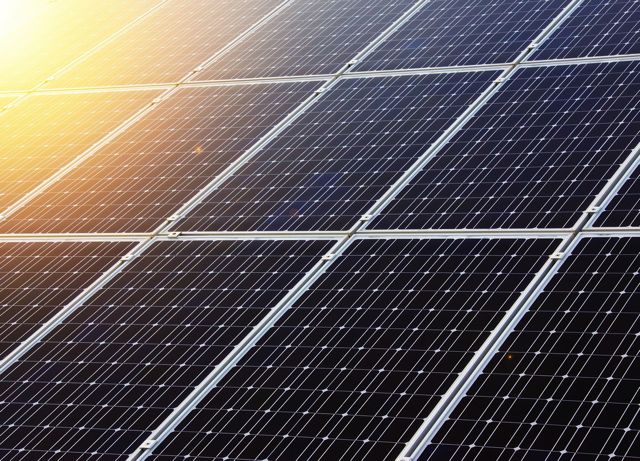
Spaced-based solar power collects energy from the sun using panels on satellites and beams it safely back to earth with wireless technology.
The winning projects include Cambridge University, which will develop ultra-lightweight solar panels for the satellites that can function in the high-radiation conditions of space, and Queen Mary University in London, which is working on a wireless system to enable the solar power collected in space to be transferred to earth.
This technology – which is in the early stages of development – has huge potential to boost the UK’s energy security, reduce the need for fossil fuels and drive down household bills by providing solar power all year round.
An independent study in 2021 found space-based solar power could generate up to 10GW a year by 2050 and create a multi-billion pound industry, with 143,000 jobs across the country.
The UK is among several countries, including Japan and the United States, committed to the development of space-based solar power. Earlier this month, scientists at the California Institute of Technology claimed to have achieved a world-first by successfully transmitting solar power to Earth from space.
Secretary of State for Energy Security and Net Zero Grant Shapps said: “I want the UK to boldly go where no country has gone before – boosting our energy security by getting our power directly from space.
“We’re taking a giant leap by backing the development of this exciting technology and putting the UK at the forefront of this rapidly emerging industry as it prepares for launch.
“By winning this new space race, we can transform the way we power our nation and provide cheaper, cleaner and more secure energy for generations to come.”
The eight projects to be awarded funding from the government’s Space Based Solar Power Innovation Competition part of the flagship £1bn Net Zero Innovation Portfolio, are:
The University of Cambridge, is receiving over £770,000 to develop ultra-lightweight solar panels that can survive long periods in high-radiation environments like space.
Queen Mary University, London, will get over £960,000 to develop a wireless power transmission system.
MicroLink Devices UK in Port Talbot, South Wales, has been awarded over £449,000 to develop the next generation of lightweight, flexible solar panels for satellites.
The University of Bristol is receiving over £353,000 to produce a simulation of solar space wireless power transfer capability.
Satellite Applications Catapult in Didcot has been awarded over £999,000 for an experiment to test the electronical steering and beam quality of its space satellite antenna. The company is also getting over £424,000 for a project to study how to advance commercial space-based solar power.
Imperial College London is receiving over £295,000 to assess the benefits and impacts of space solar.
Finally, EDF Energy R&D UK Centre will receive over £25,000 for a study to improve knowledge of the value of introducing space-based solar power into the UK’s grid.
The UK government aims to make space solar a new clean energy industry for the UK, investing in its early-stage development with the £4.3m funding announced today, including £3.3m from the Department for Energy Security and Net Zero and £1m from the UK Space Agency.
Payload systems lead at the UK Space Agency Mamatha Maheshwarappa said:
“Space technology and solar energy have a long history – the need to power satellites was a key driver in increasing the efficiency of solar panels which generate electricity for homes and businesses today.
“There is significant potential for the space and energy sectors to work together to support the development of space-based solar power, and the UK Space Agency has contributed £1m to these innovative projects to help take this revolutionary concept to the next level.”