


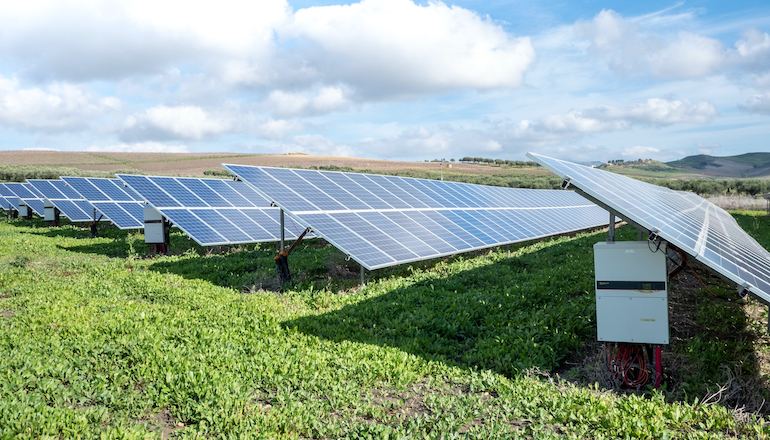
Orsted and PS Renewables have presented updated proposals for a 740MW solar project in central England.
The developer partnership is bringing forward proposals for One Earth Solar Farm, which also includes associated battery storage and infrastructure, located primarily in Nottinghamshire.
The project would connect into the National Grid at High Marnham substation.
The project is still in an early stage of development.
In Autumn 2023, the developers hosted a first round of consultation on the early proposals for the project.
Feedback from the first consultation, as well as the results of ongoing environmental and technical assessments have informed the updated proposals, which are now the subject of a second round of ‘statutory’ consultation from 29 May – 9 July 2024.
Matt Hazell, co-owner of PS Renewables, said: “We are excited to launch the second consultation for One Earth Solar Farm.
“We appreciate everyone who took the time to provide feedback during the first consultation.
“We considered the feedback we received carefully and have made a number of significant changes to the project, which we will present during this second consultation.
“We encourage anyone with an interest in the proposals to meet with us during this statutory consultation and share their views on our updated proposals.
Orsted’s Randall Linfoot said: “In line with our other projects, we want to work with local residents, community groups, and elected officials to ensure that the project is developed in a way that is sensitive to the community and environment, and that the benefits of the project are felt in the local area.”
In January 2024, a new National Policy Statement for Energy was adopted, which defines large-scale solar projects like One Earth as ‘critical national priorities’ to support the goal of increasing solar development by five-fold to decarbonise the power sector by 2035.
This is part of the UK’s legally-binding target to reduce carbon emissions to net-zero by 2050.
Because the project would produce more than 50MW of energy, it is considered a Nationally Significant Infrastructure Project (NSIP), which means that it will require a Development Consent Order (DCO) from the Secretary of State for Energy Security and Net Zero.