


US wind installations fell 15% in the first half of 2025 compared with the same period last year, but activity is expected to rebound sharply in the second half, according to the US Wind Energy Monitor report released by Wood Mackenzie and the American Clean Power Association.
The report found that 593MW was installed in Q2 – down 60% year-on-year – while total 2025 additions are projected to reach 7.7GW, with more than half of capacity coming online in the fourth quarter.
Wood Mackenzie’s director of research Leila Garcia da Fonseca said: “We are seeing this uptick in the near term because many projects are shovel-ready or under construction, fully permitted and with a turbine order in place. However, we will face uncertainty later in this decade due to tariff investigations and permitting challenges.”
Turbine orders were subdued in the first half of the year amid policy uncertainty. Although Treasury guidance confirming tax credit eligibility provided a 7% boost to near-term installations, new tariff investigations could inflate up to one-third of total project costs and delay future builds.
“We’re seeing policy whiplash,” said Garcia da Fonseca. “Treasury guidance helps the advanced development pipeline, but tariff investigations and permitting hurdles are creating uncertainty beyond 2027.”
Western states are expected to lead with 31% of installations through 2029, followed by the Midwest, which will overtake Texas in 2027 with more than 1.8GW of new capacity.
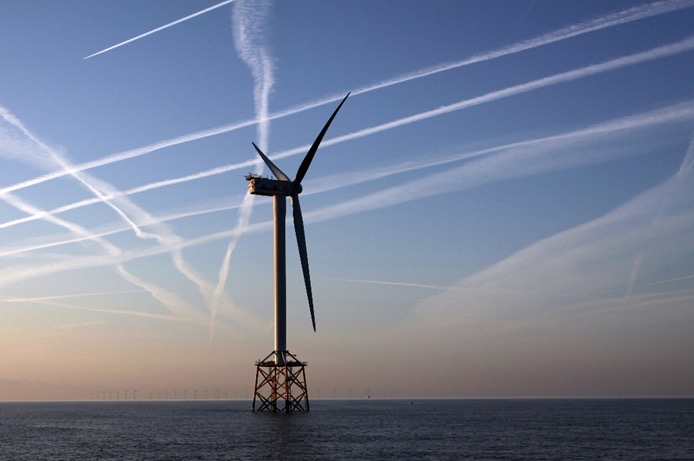
Offshore wind capacity is forecast to grow by 5.9GW through 2029, with most projects coming online in 2026 and 2027.
“Recent federal stop-work orders and regulatory uncertainty have disrupted the offshore wind sector, weakening already fragile offtake opportunities and exposing the high investment risk in US offshore wind development,” said Garcia da Fonseca. “However, our five-year outlook remains unchanged and 70% of forecasted capacity is already under construction.”
Overall, Wood Mackenzie projects an average of 9.1GW of annual wind installations across onshore, offshore, and repowering segments over the next five years, totalling about 46GW by 2029.
“Despite political headwinds, wind projects are demonstrating market resilience,” said Garcia da Fonseca. “Wind continues to secure ISAs in 2025 despite anti-wind rhetoric. The technology maintains meaningful market presence even as solar and storage lead interconnection activity, with leadership concentrated in SPP and ERCOT.”