


Siemens Energy has bagged a major contract to provide converter stations to link the Bornholm Energy Island project to the German and Danish power grids.
The Bornholm project, a joint initiative between transmission system operators Energinet in Denmark and 50Hertz in Germany, is moving towards the implementation phase.
The project will connect several offshore wind farms to a single hub to exploit the offshore wind potential of the Baltic Sea and drive the energy transition in both countries.
Energinet and 50Hertz have ordered a total of four converters and other technical components from Siemens Energy, which are to be installed on the Danish islands of Bornholm and Zealand as well as on the German mainland.
This marks the end of a six-month transitional phase in which the joint project had to be paused due to the need for political regulation between the two countries involved.
In addition to the plant design, the deal with Siemens Energy also includes manufacturing, transport, installation, testing and commissioning until the mid-2030s.
Two of the four converter stations, which convert alternating current into direct current and vice versa, are to be built on Bornholm.
They will be supplemented by a DC switchgear between the two converters and a substation. This power hub on Bornholm will be used to receive electricity from the future offshore wind farms off the coast, raise it to the voltage level of 525kV and then make it available as needed via submarine and land cables for electricity consumption in Germany and Denmark.
In total, the costs for the overall Bornholm Energy Island project currently amount to around €7bn.
The European Union has approved funding of €645m to Energinet from the Connecting Europe Facility (CEF) programme to reduce the Danish share of investment costs, as most of the electricity produced in the wind farms off Bornholm in the future will flow to Germany.
The power cable between Bornholm and the future substation site in the Vorpommern-Greifswald district on the Greifswald Bodden will have a capacity of 2GW, while the power cable to Seeland will be 1.2 GW.
50Hertz has already concluded a framework agreement with the Danish cable manufacturer NKT for the production and laying of the submarine and land cables between Bornholm and Mecklenburg-Western Pomerania.
Energinet has also commissioned NKT to establish a cable connection between Bornholm and Zealand.
Chief executive of 50Hertz Stefan Kapferer said: “Today, important foundations have been laid to make the Bornholm Energy Island vision a reality.”
Energinet chief executive Thomas Egebo added: “We are taking a big step forward into a future in which offshore wind from the Baltic Sea supplies millions of consumers with electricity.
“There’s still a lot of work ahead of us, and it’s a big task to build this groundbreaking infrastructure. Denmark needs this infrastructure to harvest enormous amounts of locally produced energy – energy that will make both Denmark and Europe greener and less dependent on external energy sources.”
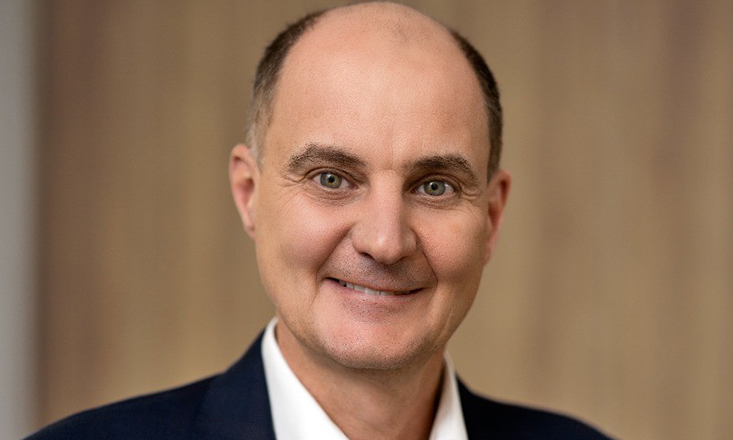
Tim Holt (pictured), member of the managing board of Siemens Energy, said: “The power grid is the backbone of a resilient energy system.
“By connecting individual countries through pioneering infrastructure projects such as Bornholm Energy Island, you are laying the foundation for a truly integrated, low-emission energy future.”
Energinet and 50Hertz have started the permitting process for Bornholm Energy Island in Denmark and are preparing for public hearings of the Danish Environment Agency on the island of Bornholm.
The approval process for the cable routes through the Exclusive Economic Zone (EEZ) in Germany, the territorial sea and on land has not yet been started.