


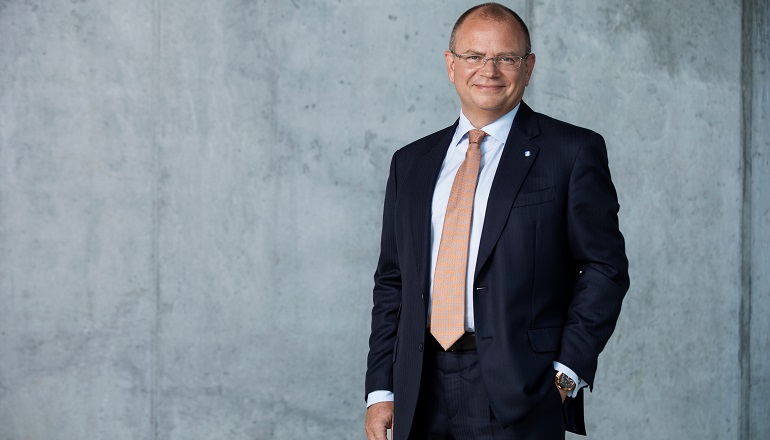
Vestas chief executive Henrik Andersen (pictured) is confident that the US onshore wind sector will continue to grow throughout the rest of the decade, despite uncertainties at the federal policy level.
The Vestas boss said the company has been buoyed by the announcement this week of an additional 950MW US order in its Q3 intake.
“You don’t like to put orders down in any market, anywhere in the world, if there is not policy clearance,” Andersen said after the release of Q2 results on Wednesday.
The CEO added that he doesn’t see the order glut as a short-term bump, and believes that there will be “substantial activity” in the US over the coming years.
“We know that from talking to US customers,” he said.
The US supply chain has gotten more developed in recent years and electricity demand is only increasing, especially from the tech sector, Andersen said.
He declined to predict where the order book would end for the year, however.
“It’s simply too lumpy.”
Andersen said the company is also awaiting guidance from the US Treasury Department, due out next week.
Trump’s so-called “One Big Beautiful Bill” gives wind and solar projects until next summer to begin construction and still qualify for tax credits under the Inflation Reduction Act.
The guidance is expected to clarify the criteria under which a project is deemed to have started construction.
Vestas is expecting a potentially shorter window than the four years stipulated under Trump’s bill for a project to complete construction.
Andersen said it is also possible that the existing threshold, spending at least 5% of project costs to qualify for the four year “safe harbour” period, could increase.
“That would be my interpretation of where we are, and in a week’s time we will know,” Andersen told analysts.
Incoming Trump administration tariffs have been a “moving target” throughout the first half of the year, Andersen said, adding that it is difficult to predict the precise impacts.
“We do whatever we can, together with customers, to mitigate” potential tariffs, the CEO said.
“When we find ways of doing it, we lock it down.”
“If you have a project that is already well-permitted, has an offtake, and also has clearance on the other parts, there’s no need to wait for potentially what comes on an IRS guidance under the safe harbour ruling,” he said.
Vestas has factories in the US that still rely on imported components and will be impacted, Andersen acknowledged.
“It will go negatively for trade and it will go negatively for the end consumer, period.”