


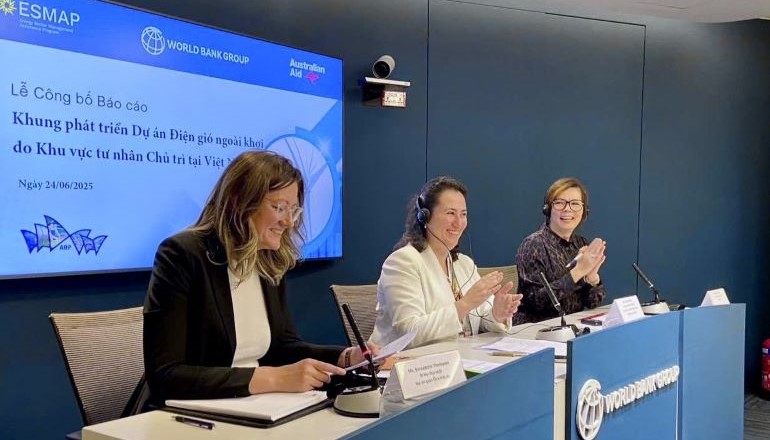
The World Bank Group has issued a new report recommending policy reforms to unlock private investment in Vietnam’s offshore wind sector.
The report outlines a framework that adapts global best practices while minimising changes to existing regulations to help attract international capital and build domestic capacity.
Vietnam’s Power Development Plan VIII sets a target of 6–17GW of offshore wind by 2035 and up to 139GW by 2050.
Achieving these goals will require large-scale investment from public, private, domestic and international sources.
“With some of the world’s most promising offshore wind resources, Vietnam is poised to harness this new technology,” said Chiara Rogate, senior energy specialist for Vietnam.
“To establish Vietnam as a reliable, long-term investment destination… clear, transparent, and attractive policies and procedures are essential,” she added.
The report, funded by ESMAP and Australia’s DFAT, was produced with support from the IFC and in consultation with Vietnam’s ministries of industry and trade and of agriculture and environment.
Regulatory reforms introduced in late 2024 and early 2025 have already begun to create more defined pathways for project development.
Sean Whittaker, co-lead of the World Bank offshore wind development programme, said: “To realise its offshore wind potential… Vietnam will need a balanced approach that harnesses both state leadership and private sector innovation.”
The report identifies remaining investment and regulatory barriers and provides targeted recommendations to scale up delivery of the country’s offshore wind pipeline.