


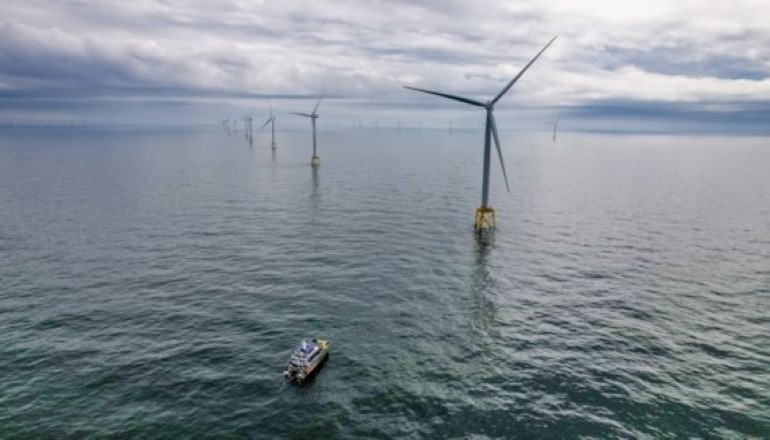
ScottishPower Renewables has confirmed the technical and economic feasibility of offshore charging for electric service and crew transfer vessels, following the publication of two new studies.
Reports by MJR Power & Automation and Oasis Marine, commissioned under SPR’s Operation Zero initiative, show that battery-powered Service Operation Vessels (E-SOVs) and electric Crew Transfer Vessels (e-CTVs) could play a key role in decarbonising offshore wind operations.
MJR’s analysis found that regular offshore and onshore charging could make electric vessels cost-competitive with marine gas oil alternatives within the next few years, particularly for SOVs. CTVs are expected to achieve full cost parity even sooner.
Oasis Marine’s study, based on a case wind farm using three e-CTVs supported by Oasis Power Buoys, forecast £15m in fuel savings and 140,000 tonnes of CO₂ emissions avoided over a 25-year project life.
Ross Ovens, managing director offshore at SPR, said: “These latest studies have the potential to help the industry take a step closer to a new era for offshore windfarm operations – not just here in the UK, but right across the globe.”
Paul Cairns, managing director of MJR, said the findings support the rapid acceleration of offshore charging as part of the sector’s net-zero goals.
George Smith, CTO at Oasis Marine, said the results offer a compelling case for operational electrification, adding: “This is not only feasible, but can deliver strong environmental and economic benefits.”
The studies were published through Operation Zero, a COP26-launched industry initiative promoting zero-emission vessels in offshore wind.