


Global energy investment is set to reach a record $3.3trn in 2025, with clean technologies attracting more than twice the capital of fossil fuels, according to the International Energy Agency.
The IEA’s World Energy Investment 2025 report forecasts $2.2trn will be directed towards clean energy, including renewables, grids, storage, nuclear, and electrification. Fossil fuel investment is expected to total $1.1trn.
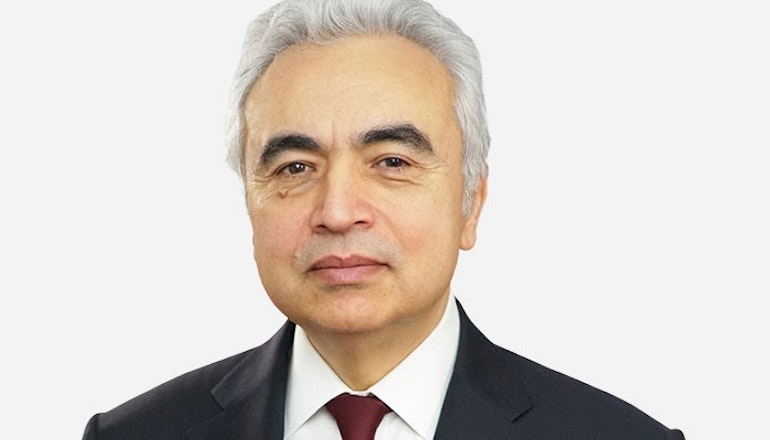
IEA executive director Fatih Birol said energy security is a key driver of this year’s record investment levels.
“Countries and companies are seeking to insulate themselves from a wide range of risks,” said Birol. “Despite geopolitical and economic uncertainties, most existing projects remain on track.”
China remains the world’s largest energy investor, spending nearly as much as the EU and US combined, with almost one-third of global clean energy investment, the IEA said.
Solar PV is the dominant technology, expected to attract $450bn in investment this year. Battery storage is also rising rapidly, exceeding $65bn, while nuclear spending is on track to reach $75bn.
Electricity investment-including generation, grids and storage-is now 50% higher than fossil fuel supply spending. A decade ago, fossil fuels outpaced electricity by 30%.
However, the IEA warned grid investment-currently $400bn-is lagging behind and must rise to match generation spending by the early 2030s to ensure electricity security.
Upstream oil investment is projected to fall by 6% in 2025, driven by weaker demand and a sharp drop in US tight oil activity. By contrast, LNG investment is surging, with new capacity expected from 2026 to 2028 in the US, Qatar, Canada and other markets.
Spending remains highly uneven. Africa, home to 20% of the global population, accounts for just 2% of clean energy investment, the report noted. Total energy investment on the continent has declined by a third over the past decade.
The IEA said international public finance must scale up and be used strategically to unlock greater private capital in emerging and developing economies.