


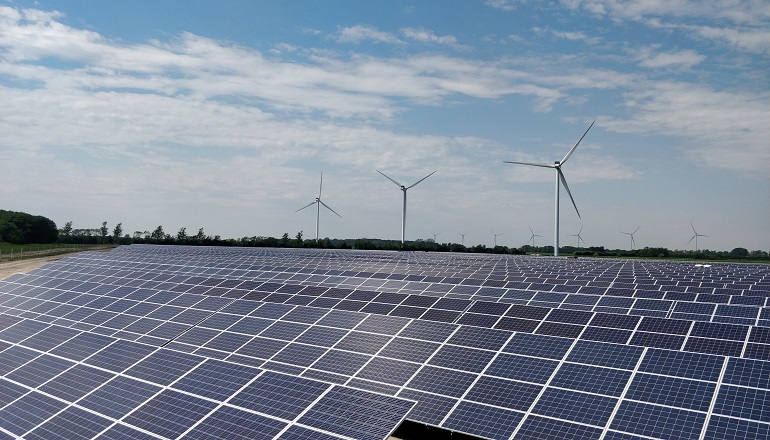
European Energy has secured a €145m long-term loan for a Lithuanian wind, solar and battery portfolio.
The loan agreement with SEB Lithuania and Swedbank Lithuania covers the Telšiai 1 and Telšiai 2 onshore wind farms, each with an installed capacity of 60MW, and the 78.5MW Anykščiai solar park.
Additionally, it will fund the construction of a new battery storage facility, which will be co-located with the Anykščiai solar park.
European Energy is expanding its presence in wind, solar, and energy storage, and considers Lithuania a key market for renewable energy development.
Deputy chief executive Jens-Peter Zink said: “As we move into the next phase of our green transition, we are pleased to receive strong support from ambitious financial institutions such as SEB and Swedbank.
“Adding battery storage to our portfolio in the Baltics strengthens the resilience of our renewable energy production, supporting true energy independence and contributing to the fight against climate change.”
The hybrid project is expected to generate around 0.5TWh of electricity annually – equivalent to approximately 4% of Lithuania’s total electricity demand.
Tadas Jonušauskas, board member and head of the corporate banking division at SEB Lithuania said: “Investments of this scale play a vital role in strengthening the country’s energy independence, and it is important for SEB to be a reliable partner in driving the green transformation.”
Swedbank’s head of corporate division Ignas Mačeika added: “Swedbank is committed to supporting the development of renewable energy infrastructure across the Baltics.
“Our latest co-operation with European Energy strengthens regional energy security. These projects reflect our long-term commitment to sustainable financing.”
To date, European Energy has constructed approximately 450MW of renewable energy capacity in Lithuania and currently has around 200MW of additional solar and storage capacity under construction.
Lithuania has set a target for all electricity consumed in the country to be generated from renewable sources by 2030.