


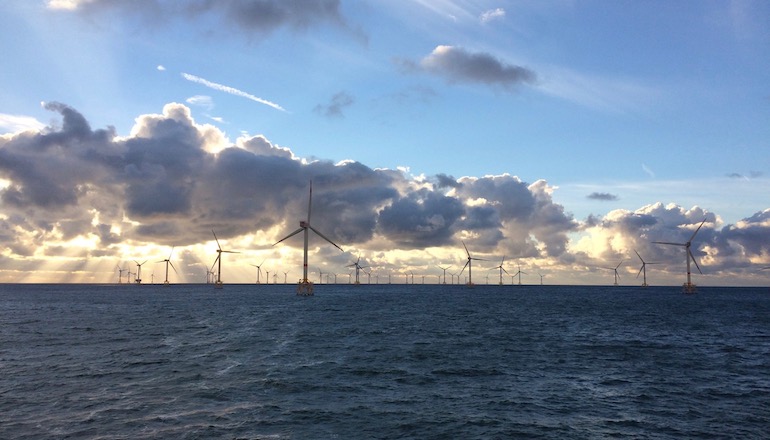
A record 117GW of new wind energy capacity was installed across the world in 2024, according to a new GWEC report.
However, the Global Wind Report highlights big disparities in terms of the pace of deployment across global markets, with the lion’s share of installations taking place in a small number of key mature markets, including China and Europe.
Last year’s growth – 109GW of new onshore wind and 8GW of offshore wind – brings global cumulative capacity of wind energy to 1,136GW, spread across all continents, with 55 countries installing wind turbines last year.
In 2024, China led the way for new installations ahead of the USA, followed by Germany and India, respectively, with Brazil rounding out the Top 5.
Those same five markets now make up the top five for total installations, as of the end of 2024, with Brazil moving past Spain.
There was record growth in other regions.
The Asia-Pacific region saw a 7% year-on-year growth rate, while Africa & Middle East saw a 107% y-o-y growth rate, thanks to Egypt installing 794MW and Saudi Arabia’s 390MW.
North America, LATAM and Europe experienced a decline in new installations compared with 2023.
The report forecasts a compound average growth rate of 8.8% for the wind industry, which means another 981GW of wind energy capacity across the globe by 2030.
GWEC’s Market Intelligence service sees consecutive record years through to 2030, with 138GW of new capacity in 2025, 140GW in 2026, 160GW in 2027, 167GW in 2028 and a leap in 2029 and 2030 to 183GW and 194 respectively.
GWEC warns of increasing policy instability in some markets, and pointed to the need to improve permitting, grid transmission and auctioning mechanisms to keep pace with the global trend for electrification, meet countries’ energy and climate targets and lessen reliance on volatile fossil fuels, while fulfilling globally agreed ambitions to triple renewable energy capacity by 2030.
Ben Backwell, chief executive of GWEC, said: “Once again, the wind industry has broken new installation records, despite more challenging macroeconomic headwinds over the last few years.
“While wind energy continues to drive investment and jobs, improve energy security and lower consumer costs, we are seeing a more volatile policy environment in some parts of the world, including ideologically driven attacks on wind and renewables and the halting of under construction projects, threatening investment certainty.”
Backwell added that “the aggressive stoking of tariff wars adds further uncertainty to international investment decisions and threatens to disrupt the international supply chains which the wind industry relies on.
“The full costs on our industry of the wide array of declared and threatened tariffs we have seen – both general and on specific commodities such as steel – have yet to be fully calculated.
“it’s vitally important that policy makers around the world don’t take their eyes of the prize, ensure stable and predictable market frameworks, work within multilateral frameworks to ensure free and fair trade, and work with investors and industry to enable rapid deployment of clean, efficient wind power to support economic growth, resilience, and prosperity.”